

Proper coffee storage means keeping your beans airtight, cool, dark, and dry. Air, light, heat, and moisture are the four forces that break down coffee’s aromatic compounds and flatten its flavor. Understanding how each one works gives you the foundation for every smart storage decision you make at home. Freshly roasted beans from Lastchaptercoffee deserve the same care after delivery as they received during roasting. Get storage right, and a bag of quality beans can taste just as good on day 14 as it did on day one.
1. Why airtight containers are the most critical coffee storage tip
Oxygen is the biggest threat to coffee freshness. Reducing oxygen concentration in a storage container from 21% to 0.5% can increase shelf life by up to 20 times. That number is not a small margin. It means the difference between beans that taste vibrant at three weeks and beans that taste flat by day five.
The best containers do two things: seal out oxygen and minimize the air space inside. A half-empty canister still holds a lot of oxygen even with a tight lid. Specialized canisters with plunger mechanisms push air out before sealing, which cuts oxygen exposure far more effectively than a standard screw-top lid.
One-way valve bags are another strong option. High-quality valve bags let CO₂ escape from freshly roasted beans without letting oxygen in. If you buy coffee in a valve bag and plan to finish it within two to three weeks, keeping it in the original bag is often better than transferring it to a canister.
- Use opaque containers to block light at the same time as sealing out air.
- Choose containers sized to match your batch. A small canister for a small amount of coffee reduces headspace.
- Avoid clear glass or plastic containers on open shelves.
- Press out excess air each time you reseal a valve bag before clipping it shut.
Pro Tip: If you use a vacuum canister or plunger-style container like an Airscape, press the lid down until you feel resistance. That resistance means you have expelled the air pocket sitting above your beans.
2. Where to store coffee in your home
Location matters as much as the container you choose. The best spot is a cool, dark cupboard or pantry away from any heat source. Kitchen cabinets above the stove, beside the oven, or next to the toaster are among the worst places for coffee. Those appliances radiate heat even when off, and temperature fluctuations accelerate staling by cycling beans through repeated expansion and contraction.
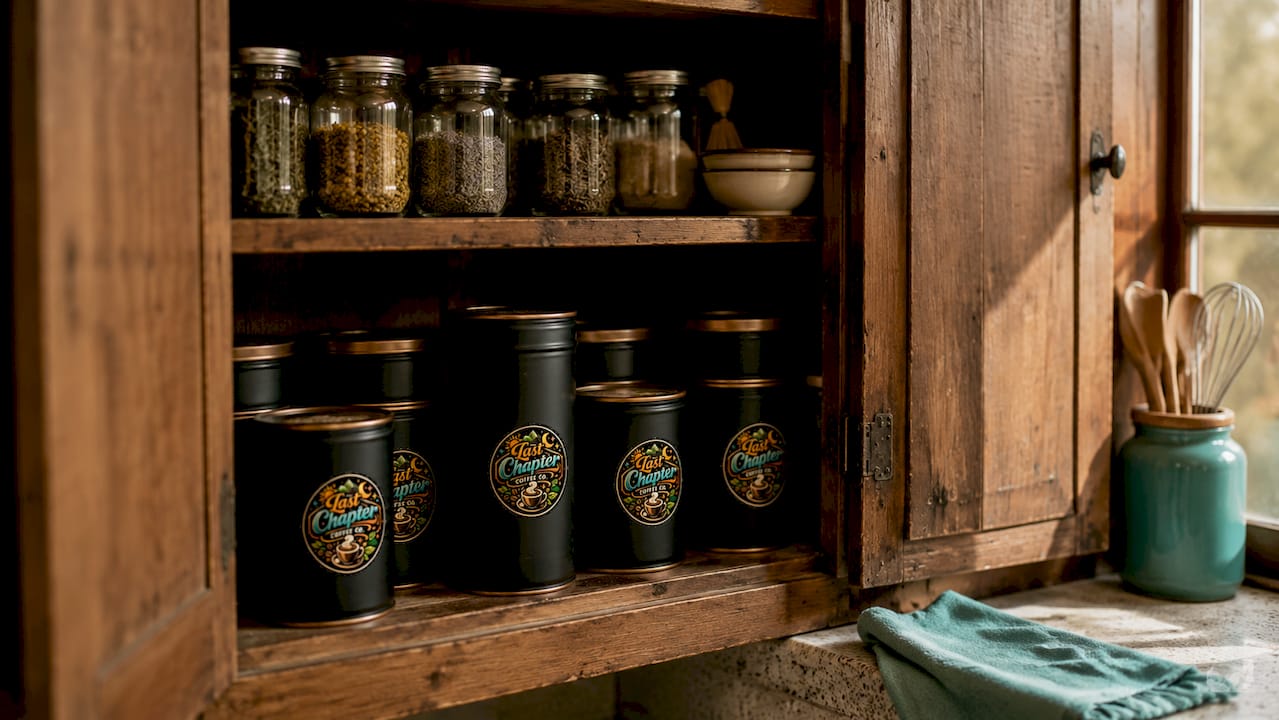
The refrigerator is not a good option for daily use coffee. Fridge storage causes condensation and odor absorption, both of which damage flavor. Coffee is porous and picks up smells from nearby food quickly. A bag of beans stored next to leftovers will taste like them within days.
The ideal home storage location has three qualities:
- Stable, cool temperature (around 60–70°F is ideal for most homes)
- No direct sunlight or artificial light exposure
- Low humidity, away from steam sources like kettles or dishwashers
Pro Tip: A high cabinet on an interior wall, away from windows and appliances, is usually the coolest and most stable spot in most home kitchens. Check the back of that cabinet with a thermometer on a warm day before committing to it as your coffee spot.
3. Whole beans vs. ground coffee: what changes about storage
Whole beans stay fresh significantly longer than ground coffee. Grinding increases the surface area exposed to oxygen, which speeds up aroma loss dramatically. Grinding immediately before brewing preserves aromatic compounds and delivers noticeably better flavor compared to using pre-ground coffee that has been sitting in a bag.
If you buy pre-ground coffee or grind in advance, the storage rules tighten considerably. Ground coffee needs a smaller, tighter container to reduce headspace. It also needs to be used faster. Here is how the two formats compare in practical terms:
- Whole beans in an airtight canister: Peak flavor for two to four weeks after roast date when stored properly.
- Whole beans in an original valve bag, resealed: Comparable freshness to a canister if used within two to three weeks.
- Ground coffee in an airtight container: Best within one to two weeks of grinding.
- Ground coffee in its original bag, resealed: Acceptable for about one week if the bag has a valve and you press out air each time.
- Pre-ground coffee left in an open bag: Noticeable flavor loss within 24–48 hours.
The practical takeaway is simple. Buy whole beans, grind only what you need each morning, and store the rest in a properly sealed container. If you prefer the convenience of pre-ground, buy in smaller quantities and use them quickly. Lastchaptercoffee’s single-serve coffee capsules solve this problem entirely by sealing each dose individually at peak freshness.
4. How to freeze coffee correctly for long-term storage
Freezing coffee works well when done right. The key word is “when.” Freezing makes sense if you buy in bulk, receive a large shipment, or want to preserve a special bag for months. It does not make sense for coffee you plan to drink within the next two weeks.
The method matters more than the decision to freeze. Vacuum-sealed single-dose portions stored in the freezer slow oxidation approximately 15-fold and can preserve coffee quality for 6–12 months. That is a meaningful extension compared to room-temperature storage.
Follow these steps for freezing coffee correctly:
- Divide beans into single-use portions before freezing. Each portion should be exactly what you need for one brew session.
- Use vacuum-sealed bags or airtight, moisture-proof packaging for each portion.
- If using one-way valve bags, tape over the valve before freezing. Valves can fail to seal properly at freezing temperatures.
- Never refreeze thawed coffee. Repeated thawing and refreezing causes moisture condensation that degrades flavor.
- Grind beans directly from frozen without thawing first.
“Competition baristas freeze single doses and grind from frozen to get cleaner, more uniform grind particles. Cold beans are more brittle, which means cleaner fractures during grinding and better extraction.” — Coffee storage research consensus
Grinding from frozen is not just about preservation. Cold frozen beans fracture more cleanly during grinding, producing a more uniform particle size distribution. Better particle size means more even extraction and a better-tasting cup.
5. Common coffee storage mistakes to avoid
Most coffee storage mistakes come from convenience habits that quietly destroy flavor. Knowing the most common ones helps you avoid them without overhauling your entire routine.
Leaving beans in a decorative glass jar on the counter looks great but exposes them to light and temperature swings all day. Clear containers on open shelves are one of the fastest ways to stale good coffee. Opaque containers stored inside a cabinet solve both problems at once.
Buying too much coffee at once is another frequent error. Freshness starts declining from the roast date, not from when you open the bag. A two-pound bag bought “for value” often means the last third of it tastes noticeably flat. Buying smaller quantities more frequently keeps every cup in the peak freshness window.
Scooping coffee with a wet spoon introduces moisture directly into the container. Always use a dry scoop or pour beans out rather than digging in with a damp utensil. Moisture inside a sealed container accelerates mold risk and off-flavors faster than almost any other mistake.
Key Takeaways
Proper coffee bean preservation requires controlling oxygen, light, heat, and moisture at every stage of storage, from the container you choose to the location you pick in your home.
| Point | Details |
|---|---|
| Oxygen control is the top priority | Reducing oxygen to 0.5% can extend shelf life up to 20 times compared to open storage. |
| Container design matters | Plunger or vacuum canisters outperform standard lids by actively removing headspace air. |
| Location affects freshness daily | Store coffee in a cool, dark cabinet away from heat appliances and steam sources. |
| Whole beans outlast ground coffee | Grind only what you need per session to preserve aromatic compounds at their peak. |
| Freeze in single doses only | Portion before freezing, tape valve bags, and grind directly from frozen without thawing. |
What I’ve learned from storing coffee the wrong way first
The most common storage mistake I see is also the most understandable. People buy a beautiful bag of coffee, set it on the counter next to the coffee maker, and wonder why it tastes dull by week two. The counter is the worst place in the kitchen for coffee. Heat from the machine, light from the window, and temperature swings through the day hit it constantly.
I spent years thinking a good canister was enough. It is not, if the canister sits in a warm spot. The container and the location work together. A perfect vacuum canister on a sunny windowsill still produces stale coffee. A simple clip-sealed bag inside a cool, dark drawer beats it every time.
The fridge myth is worth addressing directly. Expert consensus is clear: the fridge introduces condensation and odor absorption that hurt coffee more than they help. The only exception is a perfectly sealed, vacuum-packed portion going into the freezer for months. Daily-use coffee belongs at room temperature in a good container.
My honest advice for most home coffee drinkers: you do not need a $60 canister or a freezer full of portioned bags. You need a clean, opaque, airtight container in a cool cabinet, and you need to buy coffee in amounts you will finish within two weeks. That single habit change will improve your cup more than any gadget.
— Rogee
Fresh beans deserve good storage from day one
Every storage tip in this article works best when you start with freshly roasted coffee. Beans that arrive stale cannot be saved by a perfect container.
Lastchaptercoffee ships freshly roasted artisan blends directly to your door with free US shipping on every order. The African Kahawa Blend is a strong starting point for anyone who wants a coffee worth storing carefully. For espresso drinkers, the African Espresso delivers bold, clean flavor that holds up beautifully when stored in a vacuum canister. If you want variety without committing to a full bag, the Flavored Coffees Sample Pack lets you test multiple roasts in small, manageable quantities.
FAQ
What is the best container for storing coffee at home?
An opaque, airtight canister with a plunger or vacuum mechanism is the best option for home storage. These designs actively remove headspace air, which cuts oxygen exposure more effectively than a standard lid.
Should I store coffee in the refrigerator?
No. Refrigerator storage causes condensation and odor absorption that damage coffee flavor. Keep daily-use coffee in a cool, dark cabinet at room temperature instead.
How long do whole coffee beans stay fresh?
Whole beans stored in an airtight container in a cool, dark location stay at peak flavor for two to four weeks after the roast date. Ground coffee loses quality significantly faster, within one to two weeks of grinding.
Can you freeze coffee beans?
Yes, but only when vacuum-sealed in single-dose portions. Never refreeze thawed coffee, and grind beans directly from frozen to preserve both flavor and grind quality.
Does grinding coffee fresh really make a difference?
Grinding immediately before brewing preserves aromatic compounds that dissipate quickly once beans are ground. The flavor difference between fresh-ground and day-old ground coffee is noticeable in most brewing methods.


