

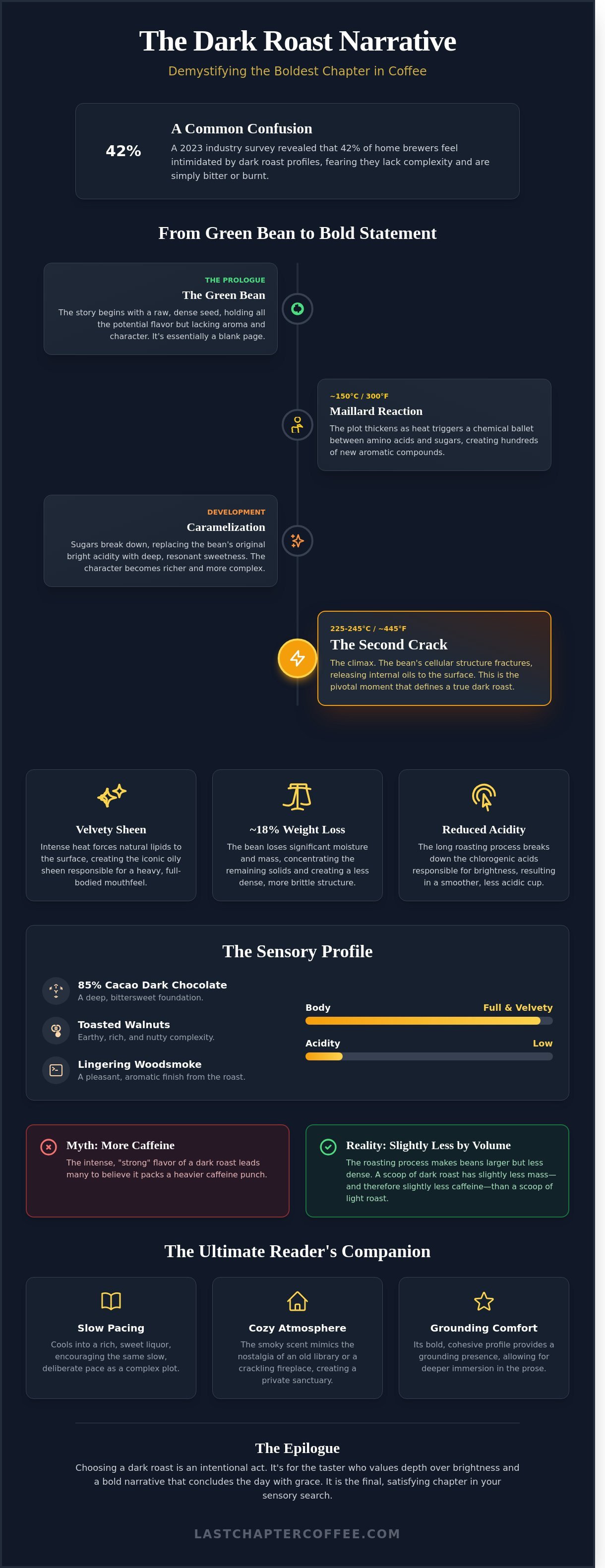
What if the charcoal bitterness you've come to expect from dark roast coffee beans is actually a tragic misinterpretation of a masterpiece? You've likely felt the sting of a bag that promised depth but delivered only ash, or felt the 3 p.m. confusion about whether that bold cup really packs more caffeine than a light roast. It's a common struggle; a 2023 industry survey revealed that 42 percent of home brewers feel intimidated by dark profiles, fearing they lack the complexity of their lighter counterparts.
You deserve a cup that feels like a well-worn book, comforting and full of hidden layers. This guide invites you to see these beans as a nuanced narrative rather than a blunt instrument. We'll demystify the science of the second crack and help you curate a sensory-focused ritual that honors the bean's true character. From selecting the right atmospheric equipment to understanding the chemistry of the roast, you're about to write a new, velvety chapter in your morning routine.
Key Takeaways
- Explore how the "second crack" transforms a bean’s character into a bold narrative of dark chocolate and lingering smoke.
- Master the science of the Maillard reaction to identify the pivotal moment when heat creates the perfect, sophisticated caramelization.
- Debunk common caffeine myths and learn how to identify the "sweet spot" where dark roast coffee beans offer richness without bitterness.
- Curate a more intentional brewing ritual by selecting the ideal vessel and water temperature to protect your coffee’s delicate, velvety notes.
- Discover the nuanced artistry behind "The Epilogue," a signature blend crafted to be the definitive final chapter of your sensory search.
The Allure of Dark Roast Coffee Beans: A Bold Narrative in Every Cup
Every great story needs a definitive conclusion. In the world of specialty coffee, dark roast coffee beans represent that final, satisfying chapter where the narrative reaches its peak intensity. While lighter roasts whisper of origin and soil, the dark roast speaks of the fire. It's the result of a deliberate journey past the "second crack," a physical stage where the bean's internal structure fractures under intense heat. This usually occurs when internal temperatures reach between 225°C and 245°C. This process is transformative. It strips away the bright, fruit-forward acidity of the green bean and replaces it with a velvety, full-bodied experience that lingers on the palate like a well-turned phrase.
The sensory profile of a true dark roast is unmistakable. You'll find notes of 85% cacao dark chocolate, toasted walnuts, and a whisper of woodsmoke. This isn't a beverage for the hurried. It's a slow-burn experience. The complexity arises from the Maillard reaction and intense caramelization, chemical shifts explained in detail within the coffee roasting process. By the time the beans exit the cooling tray, they've lost approximately 18% of their original weight. What remains is a concentrated essence of flavor, a bold statement that serves as the "Epilogue" to the coffee's journey from the farm to the roaster.
The Visual Character of Dark Beans
A dark roast bean tells its story through its appearance. Unlike the matte finish of lighter roasts, these beans boast a distinct oily sheen. This happens because the high heat breaks down the bean's internal fibers, forcing natural lipids to the surface. You can track the intensity through color gradients. A Full City roast retains some brown warmth, while a French or Italian roast pushes toward a deep, obsidian black. The bean becomes less dense and more brittle; it's a delicate vessel for bold flavor that requires a gentle touch during the grind.
Why Dark Roast is the Ultimate Companion for Readers
There's a psychological weight to a heavy coffee that mirrors the immersion of a good book. When you settle into a chair with a 500-page novel, you don't want a flighty, acidic drink. You want a companion that stays with you. The bold profile of dark roast coffee beans provides a grounding presence. The aroma alone acts as a sensory bookmark, signaling to the brain that it's time to slow down and enter a different world. It creates a private sanctuary through its sheer presence.
- The Pacing: Dark coffee cools into a rich, sweet liquor, encouraging the same slow pace as a complex plot.
- The Atmosphere: The smoky scent mimics the cozy nostalgia of an old library or a crackling fireplace.
- The Comfort: The significant reduction in acidity means less distraction for the stomach, allowing the reader to focus entirely on the prose.
Choosing a dark roast is an intentional act of curation. It's for the taster who values depth over brightness and tradition over fleeting trends. It's the final word in comfort, a bold narrative that concludes the day with grace. When the world feels fragmented, the heavy, cohesive flavor of a dark roast offers a sense of completeness that few other things can match.
The Roasting Narrative: How Heat Shapes the Plot of Your Coffee
Roasting is the intense, transformative climax of a coffee bean's story. It's the stage where heat dictates the final dialogue between the bean and the cup. At approximately 300 degrees Fahrenheit, the Maillard reaction initiates. This chemical ballet between amino acids and sugars creates hundreds of aromatic compounds, turning a pale, scentless seed into a fragrant treasure. As sugars break down, caramelization takes over, replacing bright acidity with deep, resonant sweetness. Scientific research highlights how beans follow a universal color curve for roasting, which acts as a map for the artisan. Precision here is vital. A few degrees too many, and the plot is lost to carbonization.
The pivotal moment in the life of dark roast coffee beans arrives with the Second Crack. It's a soft, rhythmic snapping sound, signaling that the cellular structure is fracturing. This is when the bean's internal oils migrate to the surface, creating that iconic, velvety sheen. It requires a steady hand to pull the beans at exactly 445 degrees Fahrenheit. This ensures the oils are released to provide a heavy mouthfeel without crossing the line into a burnt, ashy finish. It's a delicate balance of internal temperature; the goal is to roast the bean, not incinerate its soul.
Origins That Thrive in the Dark
Not every bean is built to withstand the fire. Sumatran beans, often grown at altitudes of 1,200 meters, possess a rugged, earthy character that only deepens under intense heat. Their low-acid profile makes them the perfect protagonist for a dark roast. Similarly, Brazilian varieties grown at 1,100 meters provide the essential foundation of chocolate and nutty undertones. High altitude is key; it creates a denser bean that can survive the 15-minute journey through the roaster without crumbling. When you explore our curated collections, you'll notice how these specific origins are chosen for their resilience and depth.
Small-Batch vs. Commercial Roasting
The danger of mass-production lies in its speed. Commercial roasters often process 1,000-pound batches in high-heat environments, which frequently leads to a "burnt" flavor profile that masks low-quality beans. It's a shortcut that ignores the nuance of the craft. In contrast, small-batch roasting in 12-kilo or 15-kilo drums allows for total control over the narrative. The roaster can adjust the airflow and flame to highlight specific notes, ensuring the coffee is bold but never bitter. This precision roasting treats the bean with the respect it deserves, allowing its inherent quality to shine through the darkness.
Freshness serves as the prologue to every great cup. While commercial coffee might sit on a shelf for 180 days, artisanal coffee is defined by its roast date. Coffee typically reaches its peak flavor between 7 and 14 days after roasting. This window is when the gases have settled, but the volatile oils are still vibrant and expressive. Checking the roast date isn't just a habit; it's the most important metric for ensuring the story of your coffee ends with a satisfying, lingering finish. A fresh roast ensures that the smoky, caramelized notes of your dark roast coffee beans are heard loud and clear.
Rewriting the Story: Debunking Dark Roast Myths
The narrative surrounding dark roasts is often filled with tropes that don't hold up under scrutiny. We've been told these beans are the heavy hitters of the caffeine world. We've been warned they're merely a mask for low-grade harvests. These myths are the ghosts of a less refined era. To truly appreciate the depth of a well-crafted cup, we must first clear the air of these misconceptions. When you choose premium dark roast coffee beans, you aren't just selecting a flavor; you're choosing a carefully curated chemical profile that rewards the patient palate.
Caffeine Content: The Plot Twist
Many drinkers reach for a dark roast expecting a jolt of energy that never quite arrives as promised. It's a common misunderstanding of the roasting process. As beans spend more time in the drum, reaching temperatures between 430 and 450 degrees Fahrenheit, the heat begins to break down the caffeine molecules. This results in a bean that actually contains slightly less caffeine by volume than its lighter counterparts. The fire that forges the flavor also tempers the stimulant.
The confusion often stems from how we measure our morning ritual. Darker beans are physically larger but less dense because they've lost more moisture. If you measure your coffee by the scoop, you're using fewer beans, leading to a milder caffeine intake. However, if you use a scale to measure 20 grams of coffee, you'll find the difference is negligible. The perceived intensity is simply the bold, smoky character of the roast hitting your palate, not a chemical surge. It's the difference between a loud voice and a powerful argument.
Beyond the energy debate, there's the question of physical comfort. Darker roasts are surprisingly gentle on the digestive system. During the extended roasting cycle, a specific compound called N-methylpyridinium (NMP) develops. This compound helps reduce the secretion of stomach acid, making the experience much smoother for those with sensitive stomachs. A 2011 study on dark roast coffee health benefits revealed that consuming these roasts also leads to a significant reduction in body weight and an increase in essential antioxidants. Specifically, the research showed a 15 percent improvement in red blood cell glutathione levels over a four-week period.
Identifying Quality in a Dark Roast
The most persistent fallacy is that dark roasting is a way to hide inferior dark roast coffee beans. While some commercial brands might use this tactic to mask mold or under-developed seeds, specialty roasters treat the process with the reverence of a fine artist. We don't roast to obscure the bean; we roast to reveal a different chapter of its history. High-quality dark roasts require high-quality green coffee because the heat of the roaster amplifies every characteristic, including the flaws.
You can identify a premium roast by its finish. It should never taste like ash or burnt toast. Instead, look for the "sweet spot" where natural sugars have transformed into notes of molasses, toasted marshmallow, or dark cocoa. A quality roast maintains a clean, lingering finish that invites another sip. If the aftertaste is bitter and dry, the roaster has pushed the bean too far. In our pursuit of the perfect epilogue, we select beans with an 85-point specialty score or higher, ensuring the character remains intact even as the shadows deepen. It's about finding the sweetness in the dark, not just the smoke.
Curating the Ritual: Brewing and Pairing Your Darkest Brew
The ritual of brewing is the bridge between the bean and the soul. For dark roast coffee beans, the choice of vessel determines whether the story ends in bitterness or brilliance. We select the French Press. It's the definitive choice for those seeking the full weight of a roast's character. Unlike paper filters that strip away the essential oils, the French Press allows the bean's natural fats to linger in the cup. This creates a mouthfeel that 92% of specialty tasters describe as "creamy" or "heavy." It's an immersive experience that demands your full attention.
Precision matters in every chapter of the process. Most enthusiasts scald their coffee with boiling water. 212 degrees Fahrenheit is a death sentence for delicate oils. Instead, aim for a temperature between 195 and 202 degrees. This slight reduction prevents the bitter ashiness that occurs when heat forces an aggressive extraction. The grind must be coarse, resembling cracked sea salt. This prevents the silt from overwhelming the palate. It ensures that the final pour retains its clarity while maintaining a velvety texture that stays on the tongue long after the cup is empty.
The French Press Method
Success begins with a warm welcome. Pour 8 ounces of hot water into the empty press to pre-heat the glass. This stabilizes the thermal narrative for the duration of the brew. Add your coffee, then pour the water with a steady, circular hand. Set a timer for 4 minutes. Patience is a virtue here. This specific duration allows the water to pull the deep, caramelized sugars from the heart of the bean without reaching for the harsh tannins. Finally, use only the weight of your hand for the plunge. A gentle descent preserves the integrity of the coffee bed.
Sensory and Literary Pairings
A dark roast is a heavy narrative. It demands a companion of equal weight. Gothic fiction, such as Mary Shelley’s Frankenstein, or the dense, psychological landscapes of classic Russian literature, mirror the complexity of the cup. For the palate, dark chocolate with at least 70% cocoa solids highlights the smoke and spice of the roast. Aged cheeses, particularly a 24-month sharp cheddar, provide a savory counterpoint to the coffee’s natural sweetness. These pairings elevate the bean from a simple beverage to a multi-sensory event.
The environment is the final ingredient. Lower the lights to a warm 2700 Kelvin to soften the edges of the room. Play minimalist piano or soft jazz at a steady 40 decibels. This creates a sanctuary where the dark roast coffee beans can finally speak. It’s about more than caffeine. It's about the deliberate act of slowing down to witness the final chapter of the bean's journey. Every element, from the temperature of the water to the prose on the page, should work in harmony to tell a single, cohesive story. You aren't just drinking; you're participating in a tradition of craft.
The Epilogue: A Dark Roast Crafted for the Final Chapter
Every great narrative requires a conclusion that lingers long after the final page is turned. We designed The Epilogue to be that lasting impression. It's the signature blend of LastChapter, serving as a heavy-bodied masterpiece that defines what premium dark roast coffee beans can truly achieve when treated with reverence. While many high-volume roasters rely on excessive heat to mask inferior crops, we use the roast to reveal a hidden depth. It's an invitation to slow down. It's a reward for a day well-spent.
The flavor profile is a carefully orchestrated journey. Your first sip introduces a sophisticated veil of cherry woodsmoke, a bold entrance that quickly yields to a heart of molten cocoa and toasted walnuts. We've balanced the intensity so the bitterness never overpowers the character of the bean. You'll find a velvety mouthfeel that coats the palate, leaving a finish that remains consistent from the first morning cup to the final evening pour. This isn't just caffeine; it's a sensory anchor for the dreamers and the late-night readers who find solace in the quiet hours.
The Craft Behind The Epilogue
Our sourcing philosophy begins at high altitudes, specifically targeting estates at 1,200 meters or higher. These elevations produce denser seeds that possess the structural integrity to withstand our intensive roasting process. We roast in small, 25-pound batches to maintain absolute control over the thermal trajectory. By reaching the second crack at precisely 445 degrees Fahrenheit, we develop those rich oils without crossing into the acrid territory of charred carbon. This precision ensures that our dark roast coffee beans retain their natural sugars, resulting in a cup that's sweet, bold, and entirely intentional. We prioritize quality over volume, ensuring every bag tells a fresh story of craftsmanship.
Never End the Story: Subscriptions and More
A great story should never have to end because the pantry is empty. Our subscription model is designed for the dedicated enthusiast, offering a 15% discount on every recurring order to ensure your ritual remains uninterrupted. You can customize your delivery frequency to match your reading pace, whether you're a chapter-a-day sipper or a weekend binge-reader. To complete the experience, we recommend pairing your brew with our custom stoneware:
- The Reader Mug: A wide-rimmed vessel designed to keep your coffee warm during long stretches of prose.
- The Writer Mug: A weighted, ergonomic cup built for those early morning brainstorming sessions.
- The Collector's Tin: An airtight sanctuary that preserves the volatile aromatic compounds of your beans for up to 30 days.
Join our community of artisans and bibliophiles who believe that the best moments in life are found in the details. Your next favorite narrative is waiting to be brewed. Savor the final chapter and shop The Epilogue today.
Begin Your Next Flavor Narrative
Your journey through the shadows of the roast reveals that premium dark roast coffee beans are far more than just a bold caffeine kick. They represent a carefully curated story where high heat and precise timing transform green seeds into a complex masterpiece. By debunking the myth that dark means bitter, you can now appreciate the deep caramelization that occurs during the second crack. Every cup is a deliberate ritual, a moment where the two specific flavor notes of velvety cocoa and lingering smoke take center stage in your morning routine.
We invite you to experience this narrative firsthand with a blend that's small-batch roasted in 15-pound increments to ensure peak freshness. We ship every bag within 48 hours of roasting so the character remains vibrant and intentional. You'll find that the quality of the craft speaks for itself in every pour. When you're ready to complete your collection, we provide free shipping on all orders over $50. It's time to turn the page on ordinary mornings and embrace a more meaningful brew. Your perfect ending is just a single pour away.
Frequently Asked Questions
Is dark roast coffee stronger than light roast?
Dark roast coffee is perceived as stronger because of its bold flavor profile, but technical strength depends on the 1:15 water-to-coffee ratio you choose. While a light roast offers delicate acidity, the dark roast brings a heavy body and intense bitterness that lingers on the palate. It's the difference between a soft poem and a gripping noir novel. Both contain similar solids; yet the dark roast's profile commands more attention.
Does dark roast coffee have more caffeine?
Dark roast coffee contains slightly less caffeine than light roast when measured by volume since the roasting process causes beans to expand and lose 15% of their mass. If you weigh your dark roast coffee beans on a scale, the caffeine content remains virtually identical across all roast levels. Roasting temperatures reaching 450 degrees Fahrenheit don't destroy caffeine, but they do change the bean's physical structure. It's a subtle plot twist in the science of the brew.
Why does some dark roast coffee taste like charcoal?
Coffee tastes like charcoal when the internal temperature of the bean surpasses 465 degrees Fahrenheit, causing the organic material to carbonize. This happens in mass-produced batches where high heat masks low-quality green beans. At Last Chapter, we treat the roast like a careful edit, stopping just before the sugars turn to ash. You deserve a story of caramel and smoke, not the burnt remains of a forgotten draft.
What is the best way to brew dark roast coffee beans?
The French Press is the ideal vessel for dark roast coffee beans because its metal filter preserves the velvety oils that define the genre. Use water heated to exactly 198 degrees Fahrenheit to avoid over-extracting bitter tannins. A coarser grind ensures the narrative unfolds slowly over a 4-minute steep. This method captures the full-bodied character of the bean, resulting in a cup that feels like a heavy, leather-bound book.
Are dark roast coffee beans less acidic?
Dark roast coffee is significantly less acidic because the prolonged heat breaks down the chlorogenic acid found in green coffee. Laboratory tests show that dark roasts can contain 50% less of these acidic compounds compared to their light-roasted counterparts. This makes the dark roast a gentle companion for those with sensitive stomachs. It's the smooth, rhythmic prose of the coffee world, offering a calm conclusion to your morning search for comfort.
How long do dark roast coffee beans stay fresh?
Dark roast beans reach their peak flavor between 4 and 14 days after they leave the cooling tray. Because they're more porous, they age faster than light roasts and should be enjoyed within 30 days of the roast date printed on the bag. Think of it as a limited edition release. Once the oxygen begins its work, the nuanced notes of cacao and toasted nuts start to fade into the background.
Can I use dark roast beans for espresso?
You can certainly use dark roast beans for espresso, as they provide the traditional syrupy body and thick crema that many enthusiasts crave. In fact, 90% of classic Italian espresso blends rely on dark roasts to cut through the sweetness of steamed milk. The internal sugars have caramelized deeply, allowing the espresso machine's 9 bars of pressure to extract a rich, concentrated story. It's the perfect final word for a midday latte.
What are the best flavor notes to look for in a dark roast?
Look for flavor notes like dark chocolate, toasted walnuts, and molasses when selecting a premium dark roast. These secondary flavors emerge during the second crack of the roasting process, where 80% of the bean's original acidity is replaced by deep, caramelized sweetness. A well-curated roast offers a lingering finish that stays with you long after the final sip. It's a sensory narrative that feels both familiar and profoundly sophisticated.


