

Gourmet coffee grinding is the process of producing consistent, uniform grounds tailored to your specific brew method to unlock the full flavor potential locked inside your beans. The grind is the single variable that controls extraction speed, aroma release, and flavor balance more than any other step in your brewing process. Get it wrong and even a $40 bag of specialty beans tastes flat or harsh. Get it right and a mid-range burr grinder transforms your morning cup into something worth waking up for. This guide covers everything from grind size science to grinder selection and step-by-step dialing techniques.
What is the gourmet coffee grinding guide approach to grind size?
Grind size controls how quickly water extracts soluble compounds from coffee particles. Finer grinds expose more surface area, which speeds up extraction. Coarser grinds do the opposite. The relationship between contact time and grind size is the foundation of every brew method you will ever use.
Long contact times need coarser grind, short contact times need finer grind. Cold brew steeps for 12 or more hours and uses an extra coarse grind resembling rough breadcrumbs. Espresso extracts in roughly 30 seconds and demands a fine grind close to powdered sugar in texture. French press sits in the middle at 4 minutes and works best with a coarse grind similar to sea salt.
The flavor consequences of getting this wrong are predictable and fixable. Sour or thin coffee signals a grind too coarse; harsh or bitter coffee signals a grind too fine. These taste cues are your most reliable feedback tool, more useful than any dial number on your grinder.
- Too coarse: Sour, weak, watery, or tea-like flavor. Water passes through too fast and pulls only the bright, acidic compounds.
- Too fine: Bitter, harsh, or astringent flavor. Over-extraction pulls the unpleasant compounds that should stay in the grounds.
- Correct: Balanced sweetness, acidity, and body with a clean finish.
Pro Tip: When troubleshooting flavor, change only the grind size first. Adjusting brew time, water temperature, and dose simultaneously makes it impossible to identify the actual cause.
Filter type also affects your target particle size. Metal filters, like those in a French press or AeroPress, allow more fines into the cup and produce a fuller body. Paper filters trap fines and produce a cleaner, brighter cup. With a metal filter, grind slightly coarser than you would for the same method using paper.
Burr vs. blade grinders: which one actually matters?
The grinder type you choose determines whether your grind size is consistent or chaotic. Burr grinders produce uniform particle sizes essential for even extraction. Blade grinders chop beans randomly, producing a mix of fine dust and large chunks that extract at wildly different rates. The result is a cup that tastes simultaneously over and under-extracted.
| Feature | Burr grinder | Blade grinder |
|---|---|---|
| Particle consistency | Uniform, adjustable | Random, uncontrollable |
| Grind size control | Precise dial settings | None |
| Flavor impact | Even extraction, balanced cup | Unpredictable, often bitter |
| Price range | $70 manual, $169+ electric | $15 to $40 |
| Best for | All gourmet brew methods | Spice grinding, not coffee |
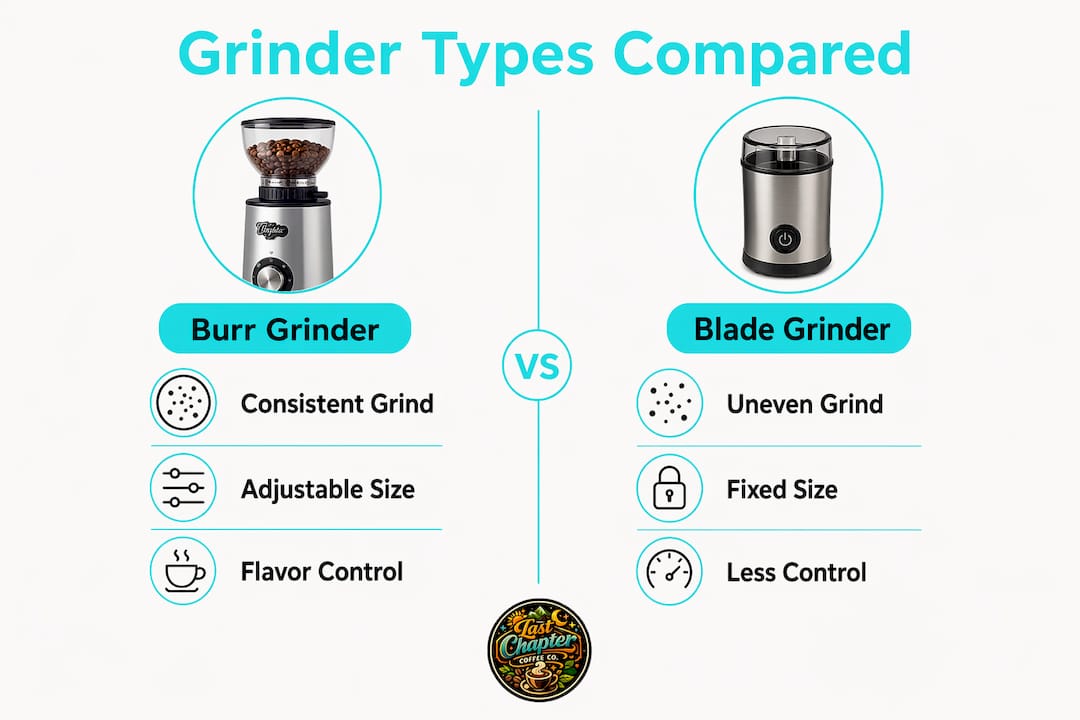
The price gap between burr and blade is real, but the flavor gap is larger. Entry-level burr grinders start around $70 for a manual model and $169 for a basic electric model. Both outperform any blade grinder for gourmet results.
Manual vs. electric burr grinders
Manual burr grinders give you tactile control and produce zero heat during grinding, which protects volatile aromatic compounds. They are ideal for travel, small kitchens, and anyone who grinds one or two cups at a time. The Timemore C2 and 1Zpresso JX are two widely respected manual options in the $70 to $100 range.
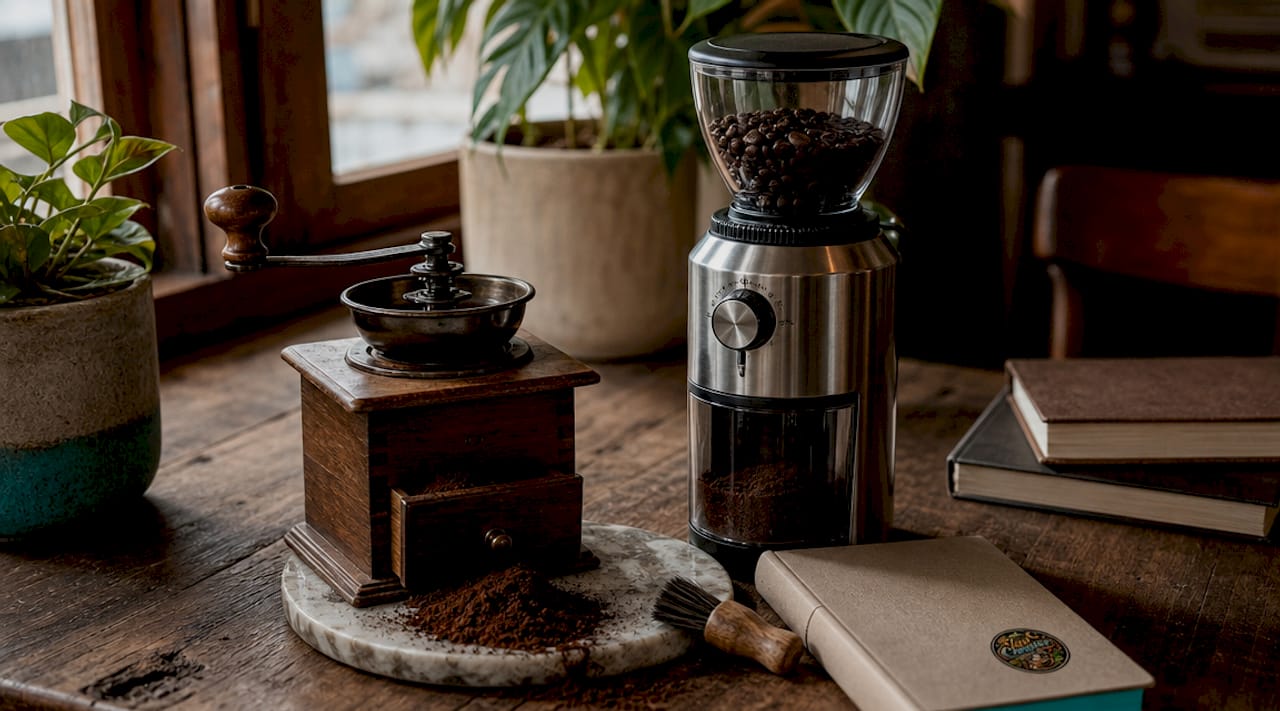
Electric burr grinders prioritize speed and convenience. The Baratza Encore is the most recommended entry-level electric burr grinder for home use, sitting around $169 and covering every brew method except espresso. For espresso, grinders like the Baratza Sette 270 or Eureka Mignon Silenzio offer the precision that espresso demands.
Pro Tip: Clean your burrs every two to four weeks with a grinder brush or a cleaning tablet like Grindz. Stale coffee oils coat the burrs and add rancid flavor to every subsequent grind.
Grind uniformity controls extraction consistency. Minimizing fine dust particles (called fines) and oversized chunks (called boulders) is what separates a mediocre grinder from a great one. When you shop for a burr grinder, look for flat burrs or conical burrs with tight tolerances. Both work well. Flat burrs tend to produce slightly more uniform particle distribution; conical burrs retain less heat and are quieter.
How to dial in the perfect grind size for every brew method
Dialing in means finding the exact grind setting that produces the best-tasting cup for your specific beans, brew method, and equipment. It is a repeatable process, not guesswork.
Step 1: Measure your dose. Use a kitchen scale. A consistent dose is the baseline for any meaningful grind adjustment. Standard ratios range from 1:15 to 1:18 (coffee to water by weight). Start at 1:16 and adjust from there.
Step 2: Set your starting grind size. Use texture analogies, not dial numbers. Dial settings are not standardized across grinders; professionals rely on texture references for repeatable results.
| Brew method | Target texture | Contact time |
|---|---|---|
| Espresso | Powdered sugar | 25 to 35 seconds |
| Moka pot | Fine sand | 3 to 4 minutes |
| Pour over (V60, Chemex) | Table salt | 3 to 4 minutes |
| French press | Coarse sea salt | 4 minutes |
| Cold brew | Rough breadcrumbs | 12 to 24 hours |
Step 3: Brew and taste. Brew a full cup at your starting setting. Taste it before adding milk or sugar. Note whether it tastes sour (too coarse), bitter (too fine), or balanced.
Step 4: Adjust one click at a time. Move your grind setting one notch finer if the cup is sour, one notch coarser if it is bitter. Brew again. Repeat until the cup is balanced.
Step 5: Inspect the grounds visually. Good grind quality shows uniform particle size with minimal dust and no large chunks. Pinch a small amount between your fingers. It should feel consistent in texture, not gritty in some spots and powdery in others.
Step 6: Grind immediately before brewing. Ground coffee loses freshness within 15 minutes of grinding due to rapid oxidation. Grind only what you need, right before you brew.
Step 7: Purge stale grounds. Running a few beans through before your main grind clears stale residue from the chute and burrs. This is especially important if you have not used your grinder in a day or more.
Pro Tip: Dark roasts are more brittle than light roasts and require a slightly coarser grind to avoid over-extraction. If you switch from a light to a dark roast, start one or two notches coarser than your usual setting.
Common grinding mistakes that ruin good coffee
Most brewing problems trace back to grinding errors, not bean quality or water temperature. Recognizing these mistakes early saves you weeks of frustrating cups.
- Using one grind size for every brew method. A French press grind used in a pour over will produce a weak, sour cup. A pour over grind used in a French press will clog the filter and taste bitter. Match grind to method every time.
- Grinding too much at once. Grinding a week’s worth of beans in one session exposes all of them to oxygen immediately. Ground coffee stales far faster than whole beans. Grind daily, or at most every two days.
- Ignoring burr wear. Dull burrs produce more fines and inconsistent particle sizes. If your grind quality has declined despite no changes in technique, the burrs may need replacing. Most home burrs last two to five years depending on use.
- Skipping the purge. Old grounds sitting in the grinder chute are stale and slightly rancid. They contaminate every fresh grind. Purge before each session.
- Trusting dial numbers as universal references. Grinder dial numbers are not standardized. A “5” on a Baratza Encore is not the same as a “5” on a Comandante hand grinder. Always calibrate by taste and texture, not by number. This is one of the most common errors new home brewers make when following online recipes.
- Changing multiple variables at once instead of isolating grind size first. Adjusting dose, water temperature, and grind simultaneously makes it impossible to identify which change fixed or broke the cup.
Key takeaways
Grind size is the most controllable variable in coffee brewing, and a burr grinder with consistent particle output is the single most impactful equipment upgrade any home brewer can make.
| Point | Details |
|---|---|
| Match grind to brew method | Use texture references: powdered sugar for espresso, sea salt for pour over, breadcrumbs for cold brew. |
| Choose a burr grinder | Burr grinders produce uniform particles; blade grinders create uneven extraction and unpredictable flavor. |
| Grind immediately before brewing | Ground coffee oxidizes within 15 minutes; grind only what you need right before brewing. |
| Adjust one variable at a time | Change only grind size when troubleshooting; sour means too coarse, bitter means too fine. |
| Purge and clean regularly | Clear stale grounds before each session and clean burrs every two to four weeks for consistent results. |
Why grinding is where most home brewers leave flavor on the table
I have tasted coffee from setups worth thousands of dollars that underperformed because the grinder was neglected. And I have tasted extraordinary cups from a $90 hand grinder paired with a $25 pour over dripper. The grinder is not glamorous, but it is the most honest piece of equipment in your kitchen.
What most guides skip is the role of humidity and roast age. On humid days, coffee grounds clump more and can choke a pour over, slowing extraction and pushing the cup toward bitterness. On dry days, the same grind setting runs faster. I adjust one notch coarser in summer and one notch finer in dry winter months. It sounds obsessive until you taste the difference.
Roast date matters more than roast level for grind adjustments. Freshly roasted beans, within the first week off roast, release CO2 aggressively and can produce uneven extraction. Beans between 10 and 30 days off roast are in their peak window. After 45 days, even a perfectly dialed grind cannot compensate for stale beans. Pair your grinding technique with beans you know are fresh, and the results will consistently surprise you.
The patience required to dial in a grind is not a burden. It is the practice. Every adjustment teaches you something about how your specific beans, your specific water, and your specific equipment interact. That knowledge compounds over time into a skill no recipe can give you.
— Rogee
Pair your grind skills with beans worth grinding
Mastering your grind technique only pays off when the beans in your hopper are worth the effort. Lastchaptercoffee sources and ships artisan blends designed for home brewers who take their cup seriously. The African Kahawa Blend is a standout choice for pour over and French press, with a flavor profile that rewards a precisely dialed medium coarse grind. For espresso enthusiasts, the African Espresso is built for fine grind extraction and delivers a rich, balanced shot. All orders ship free within the US, so your next great cup is one grind setting away.
FAQ
What grind size should I use for a French press?
French press requires a coarse grind with a texture similar to coarse sea salt. Contact time is around 4 minutes, so a coarser grind prevents over-extraction and bitterness.
How often should I clean my coffee grinder?
Clean your grinder burrs every two to four weeks using a brush or cleaning tablets like Grindz. Purge a few beans through the grinder before each session to clear stale residue from the chute.
Does grind size really affect coffee flavor that much?
Yes. A grind that is too coarse produces sour, weak coffee; a grind that is too fine produces bitter, harsh coffee. Grind size controls extraction speed more directly than any other brewing variable.
Should I use a burr or blade grinder for gourmet coffee?
A burr grinder is the only practical choice for gourmet results. Blade grinders produce uneven particle sizes that cause simultaneous over and under-extraction, making consistent flavor impossible regardless of bean quality.
How quickly does ground coffee go stale?
Ground coffee begins losing aroma and flavor complexity almost immediately after grinding. The “Rule of 15s” limits usable freshness to about 15 minutes, which is why grinding immediately before brewing is standard practice for any serious home brewer.


