

Altitude is the single most discussed environmental factor in specialty coffee, and for good reason. The role of altitude in coffee flavor comes down to one biological truth: cooler temperatures at higher elevations slow the ripening of coffee cherries, giving the fruit more time to accumulate sugars, organic acids, and aromatic compounds. The result is a denser, harder bean packed with flavor potential that lower-elevation beans simply cannot match. Altitude is not the only variable, but it is the most reliable predictor of what ends up in your cup.
How altitude affects coffee bean development and chemistry
Temperature drops about 6.5°C per 1,000 meters of elevation gain. That cooling effect is the engine behind everything altitude does to a coffee bean. When the air is cooler, the coffee cherry takes longer to ripen, sometimes weeks or months longer than cherries grown at sea level. That extended window is where the magic happens.
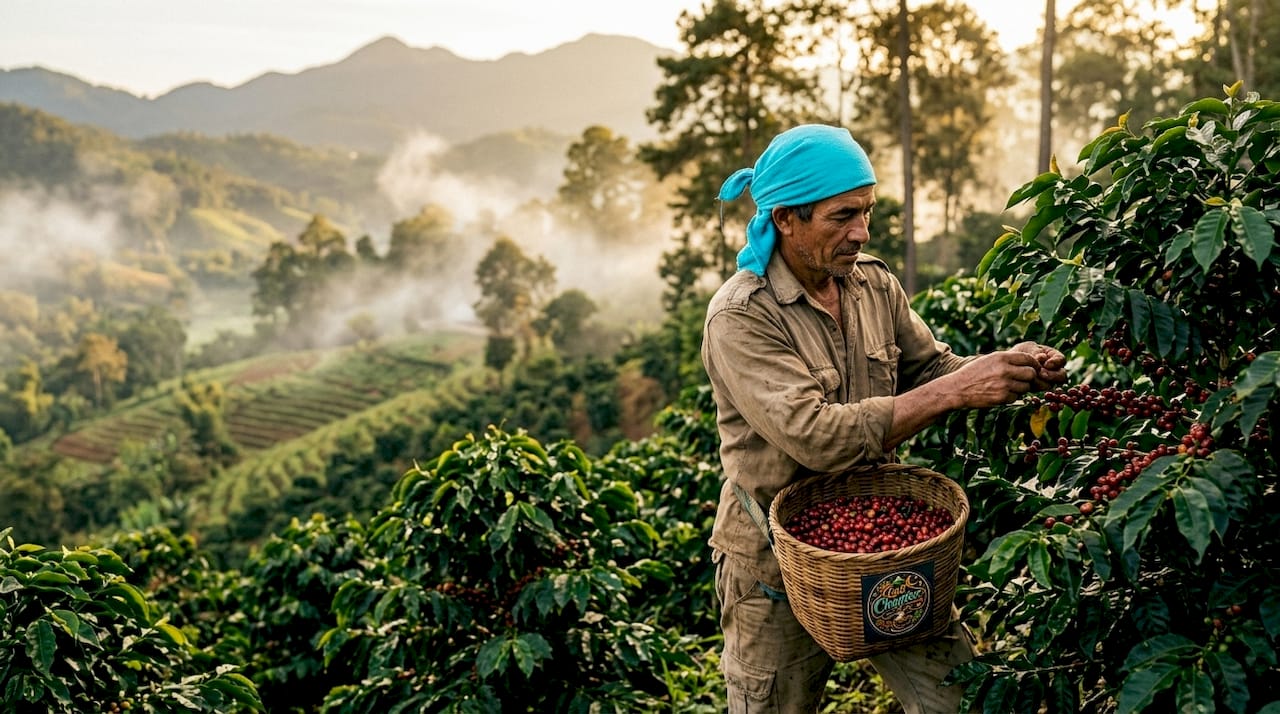
During slow maturation, the cherry has more time to convert starches into complex sugars and build up organic acids like citric, malic, and phosphoric acid. These compounds are the direct precursors to the brightness, sweetness, and aromatic complexity you taste in a well-grown high-altitude coffee. Denser, harder beans are the physical result of this process, and they carry more flavor precursors per gram than their softer, lower-altitude counterparts.
A few additional forces work alongside temperature at elevation:
- Lower oxygen levels reduce metabolic activity in the cherry, further slowing ripening and preserving delicate aromatic compounds.
- Wider day-to-night temperature swings stress the plant in a productive way, encouraging the cherry to concentrate sugars as a survival response.
- Shade canopy, common at high-altitude farms, slows cherry ripening by a similar mechanism to elevation itself, compounding the flavor benefits.
Pro Tip: When shopping for beans, look for the SHB (Strictly Hard Bean) or SHG (Strictly High Grown) label. These grades signal high-altitude slow ripening and denser bean structure, which translates to more flavor potential before the roaster even touches the beans.
Bean density is worth understanding as a practical concept. Think of it like the difference between a fresh, firm apple and an overripe one. The firm apple has more concentrated flavor compounds locked in its structure. High-altitude beans behave the same way. They hold their structure under heat, release flavor more gradually during roasting, and reward careful brewing with layered complexity.
What flavor profiles can you expect at different altitudes?
The altitude effects on coffee flavor follow a fairly predictable pattern across four broad elevation tiers. Processing method and coffee variety will shift these profiles, but the tiers give you a reliable starting point before you read a single tasting note.
| Altitude range | Typical flavor profile | Acidity | Body |
|---|---|---|---|
| Below 1,000 m | Earthy, woody, simple | Low | Full, heavy |
| 1,000 to 1,500 m | Nutty, caramel, mild fruit | Moderate | Medium to full |
| 1,500 to 2,000 m | Citrus, berry, floral, bright | High | Medium, clean |
| Above 2,000 m | Delicate, tea-like, electric acidity | Very high | Light to medium |
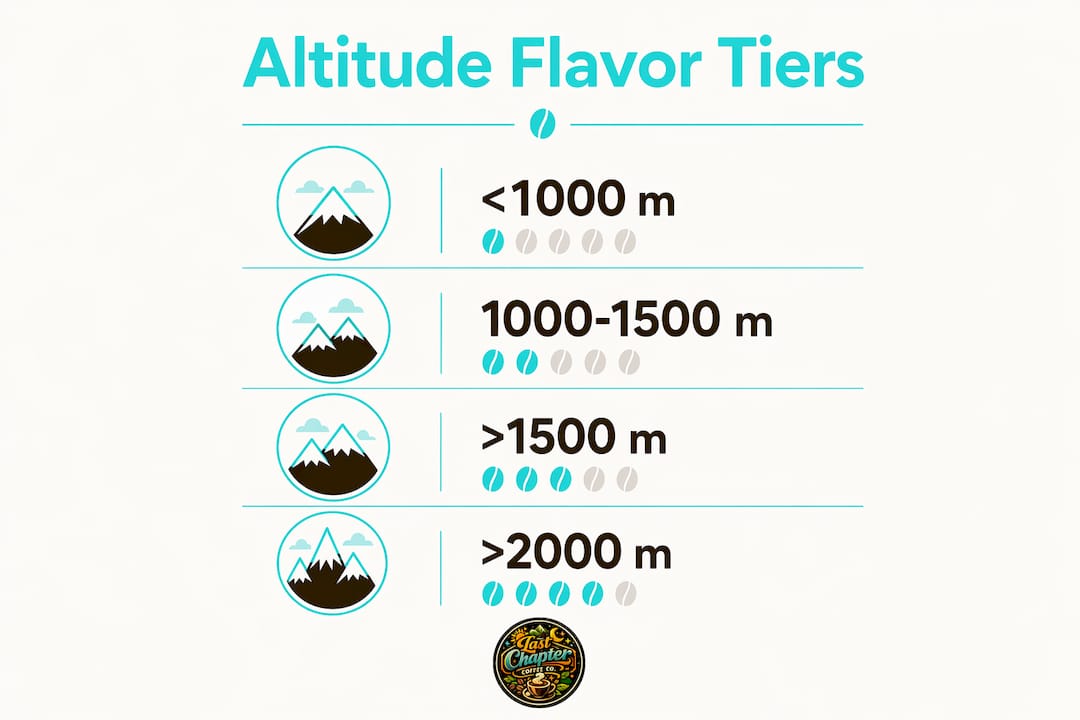
Coffees grown below 1,000 meters tend to be straightforward and comforting. They suit espresso blends and milk-based drinks well because their earthy, full body holds up against dairy without disappearing. The Robusta variety, grown predominantly at low elevations, is the defining example of this profile.
The 1,000 to 1,500 meter range is where you find many of the world’s most popular everyday coffees. Colombian mid-altitude farms and Brazilian cerrado regions produce beans in this tier, delivering the nutty sweetness and balanced acidity that made those origins household names. Higher altitude generally produces brighter acidity and floral aromatics, and you start to see that transition clearly above 1,500 meters.
Above 1,500 meters, the flavor profile shifts noticeably. Ethiopian Yirgacheffe, grown at elevations between 1,700 and 2,200 meters, is the textbook example of high-altitude coffee flavor: jasmine aromatics, blueberry sweetness, and a clean, bright finish. Kenyan coffees from the slopes of Mount Kenya, often grown above 1,800 meters, deliver the blackcurrant and tomato-like acidity that makes them some of the most distinctive beans in the world.
Above 2,000 meters, the profile becomes almost delicate. The body thins out, the acidity turns electric, and the cup can feel closer to a fine tea than a traditional coffee. These are the beans that challenge and reward experienced palates.
How altitude influences roasting and brewing techniques
High-altitude coffee beans demand more from your roaster and your brewer. Their density is an asset, but it requires deliberate adjustments to unlock fully.
On the roasting side, denser beans absorb heat more slowly. A roaster working with a Guatemalan Huehuetenango bean grown above 1,800 meters needs to apply more heat energy over a longer period to reach the same internal bean temperature as a softer, lower-altitude bean. Roasters at high elevations face an additional complication: water boils at lower temperatures above sea level, which changes how heat transfers during the roast and demands precise profile adjustments to preserve delicate flavors. Helix Coffee Co. in Breckenridge, Colorado, operating at 9,100 feet, is a real-world example of a roaster that has built its entire process around solving this problem.
The most important roasting warning for high-altitude beans: dark roasts can mask altitude-derived brightness and complexity entirely. A light or medium roast preserves the floral notes and fruit acids that slow maturation built into the bean. A dark roast replaces them with roast-driven bitterness and smokiness. If you are buying a high-altitude Ethiopian or Kenyan bean and receiving a dark roast, you are paying for altitude flavor you will never taste.
For brewing, the density difference translates into a few practical adjustments:
- Grind size: Dense beans extract more slowly. A coarser grind prevents over-extraction and bitterness, especially with light-roasted high-altitude beans.
- Brew method: Pour-over methods like the Hario V60 or Chemex are the preferred tools for high-altitude coffees. Their paper filters remove oils and sediment, letting the bright acidity and floral notes come through without interference.
- Water temperature: High-altitude light roasts respond well to slightly cooler water, around 90 to 93°C, which slows extraction and prevents the acidity from turning sharp.
- Brew ratio: Start with a 1:16 coffee-to-water ratio and adjust from there. Dense beans often need slightly more water to reach full extraction compared to lower-altitude beans of the same weight.
Pro Tip: Adjust your grind and recipe when switching between altitude tiers. A grind setting that works perfectly for a Brazilian medium-altitude bean will likely over-extract a Kenyan high-altitude bean of the same roast level. Treat each origin as its own starting point.
When altitude is not the whole story
Altitude is a directional indicator, not a flavor guarantee. Several other variables interact with elevation to shape what ends up in your cup, and understanding them makes you a sharper buyer.
Latitude and climate are the most commonly overlooked modifiers. Brazil grows quality coffee at lower altitudes because its subtropical latitude compensates for the lack of elevation. Farther from the equator, cooler ambient temperatures slow cherry maturation even at 800 to 1,000 meters, producing complexity that would normally require 1,500 meters near the equator. A blanket rule of “higher is always better” fails the moment you apply it to Brazilian specialty coffee.
Processing method reshapes flavor independent of altitude. A natural-processed (dry-processed) coffee from a 1,200-meter Ethiopian farm can taste fruitier and more complex than a washed coffee from a 1,800-meter Guatemalan farm. The natural process, where the cherry dries around the bean for weeks, adds fermentation-driven fruit flavors that altitude alone cannot produce. Washed processing strips those additions away and lets altitude-driven acidity and clarity speak more directly.
Variety genetics set a ceiling on flavor complexity that altitude cannot raise. The Gesha variety, grown at high altitude in Panama’s Boquete region, produces extraordinary floral and stone fruit notes. The same altitude with a lower-quality Catimor hybrid produces a far less complex cup. Altitude gives the plant time and conditions to express its genetic potential. It cannot create potential that was never there.
The practical takeaway: use altitude tiers as a flavor roadmap, then cross-reference with processing method, variety, and roast level before committing to a purchase. The coffee flavor profile you want is the intersection of all four factors, not altitude alone.
Key takeaways
Altitude shapes coffee flavor by slowing cherry maturation, which builds sugar complexity, organic acid brightness, and bean density that directly determine what you taste in the cup.
| Point | Details |
|---|---|
| Temperature drives flavor | A 6.5°C drop per 1,000 m slows ripening and builds sugars, acids, and aromatics in the bean. |
| Altitude tiers predict flavor | Below 1,000 m gives earthy body; above 1,500 m delivers bright acidity and floral complexity. |
| Dense beans need adjusted roasting | High-altitude beans absorb heat slowly and require light to medium roasts to preserve their flavor. |
| Brewing method matters | Pour-over with a coarser grind and slightly cooler water best expresses high-altitude brightness. |
| Altitude is one factor, not the only one | Latitude, processing method, and variety all modify altitude’s flavor impact significantly. |
Why altitude is your best starting point, not your final answer
I have tasted enough coffees across enough origins to say this with confidence: altitude is the most useful single piece of information on a coffee bag, but it is also the most misused. Roasters and retailers sometimes lean on “high altitude” as a quality signal without telling you the roast level, the processing method, or the variety. That is like describing a wine only by its vineyard elevation and leaving out the grape.
What I have found actually works is treating altitude as the opening chapter of a coffee’s story. A bean from above 1,800 meters in Ethiopia or Kenya tells me to expect brightness and complexity. That expectation then shapes how I approach the brew: lighter roast, pour-over, slightly cooler water, coarser grind. When those conditions align, the cup is extraordinary. When a roaster has dark-roasted that same bean to chase a broader market, the altitude story ends before it begins.
The other thing I push back on is the idea that low-altitude coffee is inherently inferior. A well-grown Brazilian natural from 900 meters, roasted with care and brewed as a cold brew, is a genuinely satisfying cup. The cold brew method actually suits lower-altitude, fuller-bodied beans beautifully because the long, cold extraction softens any roughness and amplifies sweetness. Matching the brew method to the altitude profile is the skill that separates good home brewing from great home brewing.
Use altitude tiers as a flavor roadmap. Pair that roadmap with tasting notes, roast level, and processing information. Then adjust your grind and your method accordingly. That combination gives you more control over your cup than any single variable ever could.
— Rogee
Explore altitude-driven coffees from Lastchaptercoffee

Lastchaptercoffee sources and roasts beans that put altitude’s flavor impact on full display. The African Kahawa Blend draws from high-altitude African growing regions where elevations above 1,500 meters produce the bright acidity, floral aromatics, and complex fruit notes that define mountain grown coffee at its best. For a more balanced profile that sits in the 1,000 to 1,500 meter flavor tier, the Max Caf Blend delivers caramel sweetness and moderate acidity that works across brew methods. Both blends ship free across the US with fast, automated fulfillment, so you can taste the altitude difference without waiting.
FAQ
What is the role of altitude in coffee flavor?
Altitude slows coffee cherry maturation by lowering temperatures, giving the fruit more time to develop complex sugars, organic acids, and aromatic compounds. The result is a denser bean with brighter acidity and greater flavor complexity compared to low-altitude beans.
At what altitude does coffee flavor noticeably improve?
Most coffee professionals observe a clear flavor shift above 1,500 meters, where bright acidity, floral aromatics, and fruit notes become pronounced. Below 1,000 meters, coffees tend toward earthy, full-bodied profiles with simpler flavor structures.
Does high-altitude coffee require different brewing?
Yes. Denser high-altitude beans extract more slowly, so a coarser grind and clarity-focused methods like pour-over produce the best results. Slightly cooler water around 90 to 93°C also prevents the bright acidity from turning sharp or harsh.
Can dark roasting ruin high-altitude coffee?
Dark roasting replaces altitude-derived brightness and floral complexity with roast-driven bitterness and smokiness. A light or medium roast is necessary to preserve the flavor compounds that slow maturation at high elevation built into the bean.
Does higher altitude always mean better coffee?
Not automatically. Latitude, processing method, and variety all modify altitude’s impact. Brazil produces excellent specialty coffee at relatively low elevations because its subtropical climate compensates for the lack of elevation, proving that altitude is a guide, not an absolute quality ranking.


