

Shipping is the single most controllable factor in whether an online coffee business retains customers or loses them after the first order. The role of shipping in online coffee sales goes far beyond moving a package from point A to point B. It determines whether beans arrive fresh, whether customers trust your brand, and whether your margins survive the cost of delivery. Carriers like USPS, UPS, FedEx, and DHL each offer different trade-offs in speed, cost, and reliability. Getting this right from day one separates coffee sellers who scale from those who stall.
How do shipping methods affect coffee freshness and customer satisfaction?
Carrier choice and transit time are the two variables that most directly determine whether coffee arrives at peak flavor. A 12-ounce bag of freshly roasted beans starts losing volatile aromatics within days of roasting. Every extra day in a warehouse or delivery vehicle accelerates that loss.
USPS Ground Advantage costs $4–$6 for single lightweight shipments with a 2–5 day transit window. That makes it the default choice for most single-bag domestic orders. Priority Mail is faster but costs more, and Priority Mail Flat Rate boxes become the better option when you are shipping three or more bags together.
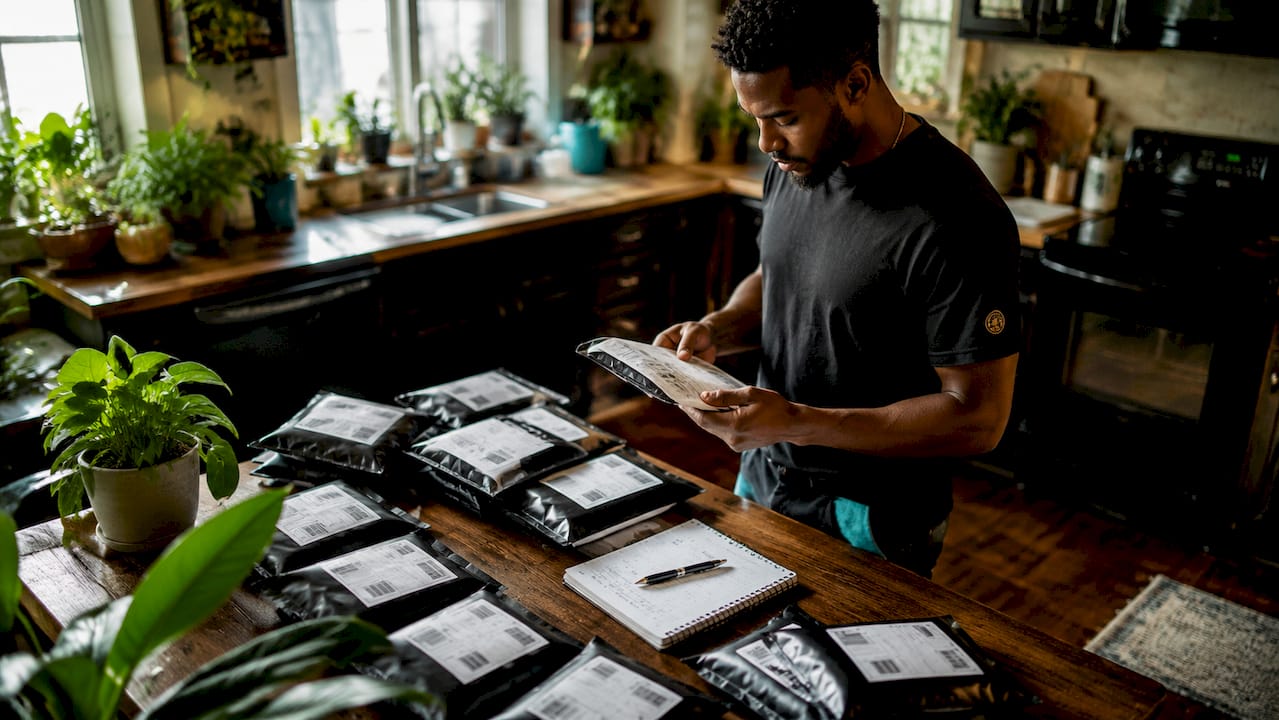
For wholesale or high-value orders, UPS provides consistent tracking and reliable delivery windows that build customer trust. DHL is the strongest option for international delivery, particularly to markets in Europe and Asia where USPS international services can be slow and unpredictable.
Weekend shipping is a hidden freshness killer. Shipping Monday through Wednesday prevents coffee from sitting in a hot distribution center over a weekend. That single scheduling discipline protects flavor more reliably than any premium packaging upgrade.
| Carrier | Best use case | Typical cost | Transit time |
|---|---|---|---|
| USPS Ground Advantage | Single bags, domestic | $4–$6 | 2–5 days |
| USPS Priority Mail Flat Rate | Multi-bag orders 3+ lbs | Varies by box | 1–3 days |
| UPS Ground | Wholesale, tracked orders | Higher | 1–5 days |
| DHL Express | International shipments | Premium | 2–5 days |
Pro Tip: Rate-shop every order. A 2-pound shipment going to Zone 4 may be cheaper with UPS than USPS, while the same order going to Zone 8 flips the math entirely.
What packaging strategies protect coffee quality during shipping?
Packaging is the last line of defense between a roaster’s craft and a customer’s cup. The wrong bag turns a great roast into a stale disappointment before anyone brews a single shot.
High-barrier, heat-sealed pouches with one-way degassing valves are the standard for shipping whole beans and ground coffee. These valves allow CO2 released by freshly roasted beans to escape without letting oxygen in. Oxygen is the primary enemy of coffee freshness, and a proper heat seal blocks it at the source.
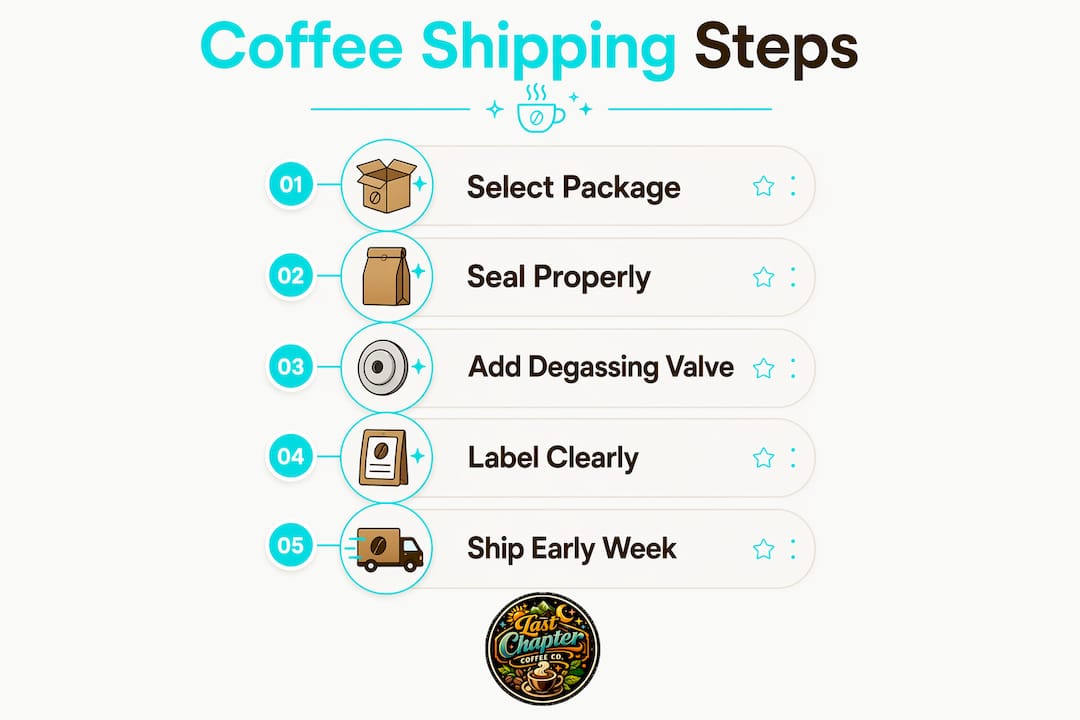
Zippers are useful for the consumer once the package arrives, but zippers alone are insufficient to protect coffee during transit. Compression from stacking, vibration from trucks, and temperature swings can all compromise a zipper seal. The heat seal does the real work.
Secondary packaging matters too. A well-sealed pouch inside a flimsy mailer is still vulnerable to crushing. Use cushioned mailers for single bags and corrugated boxes with void fill for multi-bag orders. The unboxing experience also signals brand quality to the customer before they even open the coffee.
Key packaging requirements for shipping coffee:
- Primary bag: High-barrier film with one-way degassing valve and heat seal
- Resealability: Zipper for consumer use, never as the sole shipping seal
- Secondary packaging: Cushioned mailer or corrugated box with void fill
- Labeling: Roast date, origin, and net weight on every bag
- International orders: HS code 090121 for roasted beans on customs documentation
Pro Tip: Print the roast date prominently on the outside of the bag. Customers who can see freshness data before opening the package report higher satisfaction, even before tasting the coffee.
How do shipping costs and geopolitical factors affect profitability?
Shipping costs are not fixed. They move with fuel prices, carrier rate changes, and global logistics disruptions that most small coffee sellers never see coming until they are already absorbing the loss.
Geopolitical instability increased export freight costs by 50%–60% in early 2026, with delays exceeding 10 days on affected routes. That kind of volatility hits green coffee procurement costs first, then ripples into domestic fulfillment budgets as sellers scramble to protect margins.
The correct response is not to absorb those costs silently. Coffee e-commerce businesses should maintain at least a 50% gross margin, with shipping costs built into product pricing rather than treated as a separate line item. Free shipping thresholds, such as free shipping on orders over $35, shift customer behavior toward larger cart sizes while protecting your per-order economics.
Four ways to protect profitability when shipping costs rise:
- Embed shipping in product price. Price your coffee to cover average shipping cost, then offer free shipping. Customers respond better to free shipping than to a lower product price with a shipping fee added at checkout.
- Set a free shipping threshold. A minimum order value for free shipping increases average order value and reduces the per-unit cost of fulfillment.
- Use flat-rate boxes for multi-bag orders. USPS Priority Mail Flat Rate boxes cap your cost regardless of weight, which protects margins on heavier orders.
- Forward contract green coffee purchases. Forward contracting green coffee shipments locks in prices before logistics disruptions push costs higher. This is a risk management tool that roasters sourcing from volatile regions should use proactively.
Avoid the trap of loss-leading on shipping to compete with large retailers. A $12 bag of specialty coffee with $7 shipping is not a sustainable model. Build the cost in, price accordingly, and communicate the value of freshness and quality instead.
What best practices make coffee logistics more efficient?
Operational consistency in fulfillment is what separates a coffee business that scales from one that creates chaos as order volume grows. The goal is a repeatable system that protects freshness and keeps customers informed at every step.
- Ship Monday through Wednesday. This prevents orders from sitting in carrier facilities over the weekend, where temperature control is inconsistent and delays compound.
- Rate-shop every order. Use a multi-carrier platform to compare USPS, UPS, and FedEx rates for each shipment based on weight, dimensions, and destination zone. The cheapest carrier changes with every variable.
- Automate order confirmation and tracking emails. Customers who receive proactive shipping updates are less likely to contact support and more likely to reorder. Transparency builds trust faster than any marketing campaign.
- Use flat-rate boxes for orders over 3 pounds. Packing multiple bags into a USPS Priority Mail Flat Rate box reduces per-unit shipping cost significantly on heavier orders.
- Standardize your pack station. A consistent packing workflow reduces errors, speeds fulfillment, and ensures every order looks the same when it arrives.
International buyers value transparency and consistent handling more than short-term price savings. For sellers shipping globally, this means accurate customs documentation, correct HS codes, and proactive communication about delays. Correct HS codes like 090121 for roasted beans are required on customs forms. Errors cause delays, seized shipments, and permanent damage to your reputation with international customers.
Key Takeaways
Shipping is a direct driver of coffee freshness, customer loyalty, and e-commerce profitability, not a background cost to minimize.
| Point | Details |
|---|---|
| Carrier selection matters | USPS Ground Advantage suits single bags; UPS and DHL serve wholesale and international orders better. |
| Packaging protects freshness | Heat-sealed pouches with degassing valves are required; zippers alone fail during transit. |
| Build shipping into pricing | Maintain at least a 50% gross margin by embedding shipping costs into product prices, not adding them at checkout. |
| Ship mid-week only | Sending orders Monday through Wednesday prevents weekend warehouse exposure and flavor loss. |
| Document international orders correctly | HS code 090121 on customs forms avoids delays, seizures, and reputational damage with global buyers. |
Why shipping deserves more attention than most sellers give it
Rogee here. After watching dozens of coffee businesses launch and stall, the pattern is almost always the same. The founder obsesses over sourcing, roasting profiles, and branding. Shipping gets treated as a checkbox. That is the mistake.
Shipping is the moment your brand becomes real to the customer. Everything before that is just a website. When a bag arrives crushed, stale, or three days late with no tracking update, no amount of beautiful packaging design or clever copy saves the relationship. The customer does not blame the carrier. They blame you.
The sellers I have seen build genuine repeat business all share one habit. They treat shipping decisions with the same rigor they apply to roast development. They test carriers, track complaint rates by shipping zone, and adjust. They do not set a shipping policy once and forget it.
The geopolitical volatility of 2026 has made this even more urgent. Freight costs that seemed stable in 2024 are now swinging 50%–60% on certain routes. Sellers who built pricing models assuming flat shipping costs are getting squeezed. The ones who built in buffers and use forward contracting are absorbing those shocks without raising prices.
My honest recommendation: audit your shipping setup every quarter. Check your average transit time by zone, your damage rate, and your cost per order. If any of those numbers are moving in the wrong direction, act before customers notice.
— Rogee
Fresh coffee, shipped right, from Lastchaptercoffee
Lastchaptercoffee was built around one principle: great coffee deserves great delivery. Every order ships with free US shipping, automated fulfillment, and packaging designed to protect freshness from roast to doorstep.
If you want to experience what properly shipped specialty coffee tastes like, start with the African Kahawa Blend, a bold, fruit-forward roast sourced from East Africa and packed for peak freshness. For high-caffeine drinkers, the Max Caf Blend delivers twice the kick with the same shipping care. Browse the full coffee collection to find your next favorite roast, delivered fast and fresh.
FAQ
What is the cheapest way to ship coffee domestically?
USPS Ground Advantage is the most cost-effective option for single bags, costing $4–$6 with 2–5 day transit. For orders over 3 pounds, USPS Priority Mail Flat Rate boxes reduce per-unit cost significantly.
How does shipping affect coffee freshness?
Transit time and temperature exposure directly degrade coffee flavor. Shipping Monday through Wednesday and using heat-sealed pouches with degassing valves are the two most effective ways to protect freshness during delivery.
What packaging do I need to ship coffee safely?
High-barrier, heat-sealed pouches with one-way degassing valves are required for freshness. Secondary packaging such as cushioned mailers or corrugated boxes with void fill protects against physical damage during transit.
What HS code do I use for international coffee shipments?
HS code 090121 applies to roasted coffee beans and must appear on customs documentation for international shipments. Incorrect codes cause delays, duties disputes, and potential seizure of the shipment.
How should I price shipping for my online coffee store?
Build shipping costs into product pricing and offer free shipping rather than adding fees at checkout. A free shipping threshold on orders above a set dollar amount increases average order value while protecting your gross margin.


