

Cold brew coffee is made by steeping coarsely ground coffee beans in cold or room-temperature water for 12 to 24 hours, producing a smooth, low-acid drink you can easily replicate at home. Unlike hot brewing, the cold brew coffee process never uses heat, which means fewer bitter compounds and acidic oils end up in your cup. The result is a naturally chocolatey, mellow beverage that tastes nothing like iced coffee. Whether you use a mason jar, a French press, or a dedicated cold brew maker, the method is straightforward. This guide covers every step, ratio, and tip you need.
How to make cold brew coffee: tools and ingredients
The right setup makes the cold brew coffee process simple and repeatable. You do not need expensive equipment. A mason jar or a French press works just as well as a purpose-built cold brew maker for most home brewers.
What you need before you start
- Coarsely ground coffee: Coarse grinds extract more slowly and evenly, which is exactly what a long, cold steep requires. Fine grounds over-extract and turn your brew bitter.
- Filtered water: Water quality directly affects flavor extraction and clarity. Avoid distilled or softened water. Standard filtered tap water is the right choice.
- A container: Mason jars, French presses, pitchers, or dedicated cold brew makers all work. Each has trade-offs.
- A filter: Paper coffee filters, a fine mesh strainer, or cheesecloth. You will need at least one, preferably two.
- A scale or measuring cups: Precision matters for consistent results.
| Equipment | Pros | Cons |
|---|---|---|
| Mason jar | Cheap, widely available, easy to clean | Requires separate filtering step |
| French press | Built-in plunger filter, easy to use | Plunger mesh is coarse; double filtering recommended |
| Dedicated cold brew maker | Integrated filter, clean results | Costs more, limited batch size |
| Large pitcher with lid | Great for big batches | Needs external filter, takes up fridge space |
Pro Tip: Buy whole beans and grind them just before brewing. Pre-ground coffee goes stale faster, and stale grounds produce flat, dull cold brew.
Roast level matters too. Medium and dark roasts bring out the chocolatey, caramel notes that cold brew is known for. Light roasts work but produce a brighter, fruitier cup that some people find thin when cold.
Step-by-step guide: three methods for making cold brew at home
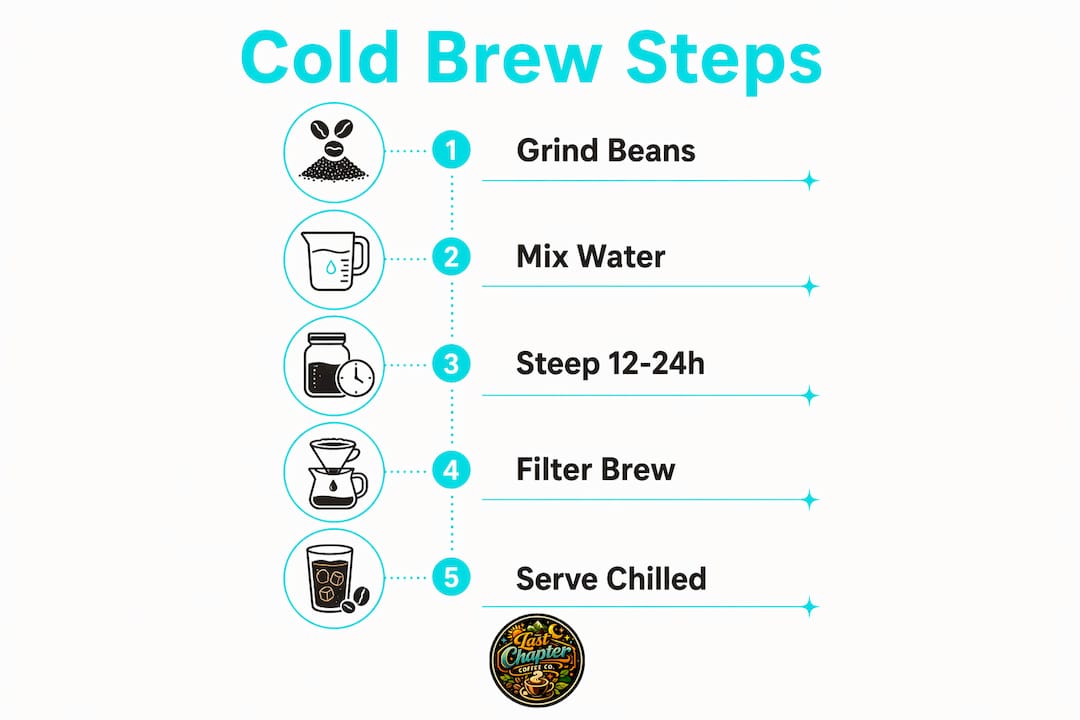
Making cold brew at home follows the same core logic regardless of method: combine coarsely ground coffee with cold water, steep, filter, and store. The differences lie in equipment and convenience.
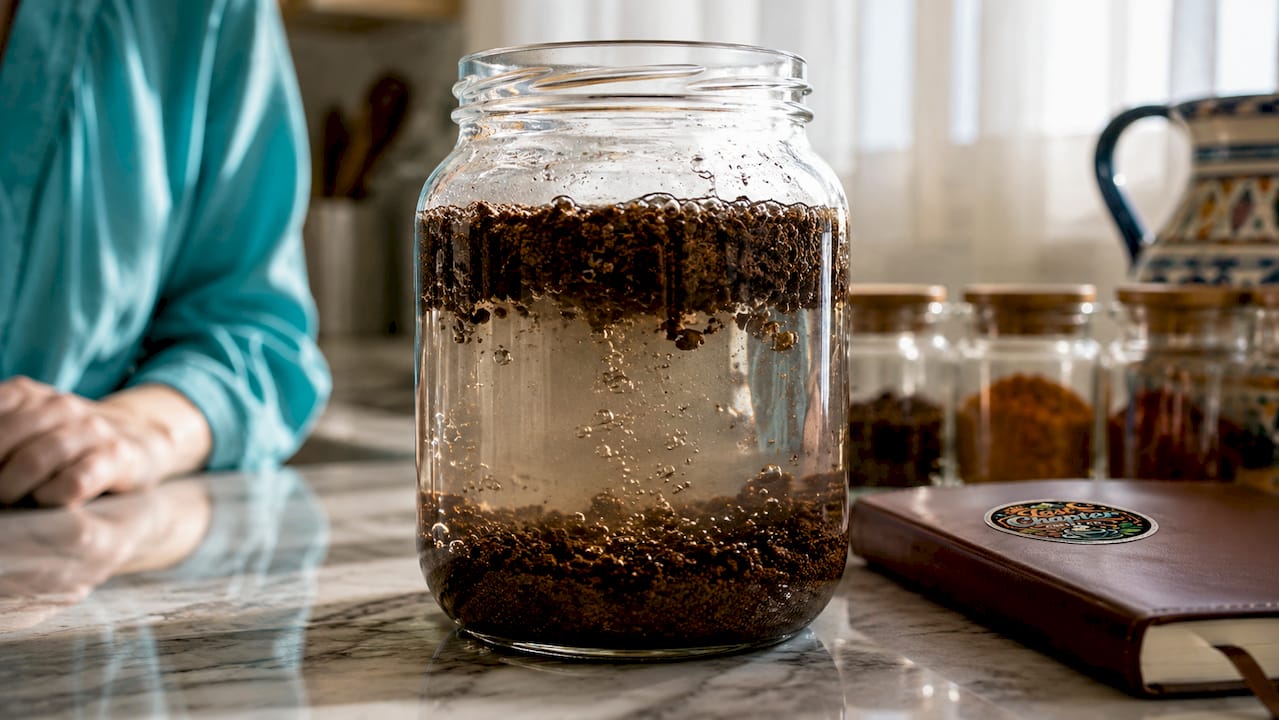
The standard ratios
A 1:5 coffee to water ratio by weight produces a concentrate. A 1:8 ratio produces a ready-to-drink brew. For concentrate, use 45 grams of coffee to 225 ml of water. Dilute the concentrate with equal parts water or milk before drinking.
Method 1: Mason jar
- Grind 45 grams of coffee coarsely (think raw sugar texture).
- Add the grounds to a clean mason jar.
- Pour in 225 ml of cold, filtered water for concentrate (or 360 ml for ready-to-drink).
- Stir gently to saturate all the grounds.
- Cover the jar with a lid or plastic wrap.
- Steep at room temperature for 16–18 hours, or in the refrigerator for 20–24 hours.
- Set a fine mesh strainer over a bowl and line it with a paper coffee filter.
- Pour the brew through slowly. Filtering twice through paper filters removes grit and produces a cleaner cup.
- Transfer the filtered cold brew to a sealed jar and refrigerate.
Method 2: French press
- Add 45 grams of coarse grounds to the French press carafe.
- Pour in 225 ml of cold filtered water.
- Stir to combine, then place the lid on top without pressing the plunger down.
- Steep for 16–18 hours at room temperature or 20–24 hours in the fridge.
- Press the plunger down slowly.
- Pour the brew through a paper filter into a storage jar. The French press mesh alone leaves sediment, so the extra filter step matters.
- Seal and refrigerate.
Method 3: Dedicated cold brew maker
- Fill the built-in filter basket with 45 grams of coarse grounds.
- Place the basket in the carafe and pour cold filtered water over the grounds.
- Seal the lid and refrigerate.
- Steep for 20–24 hours for concentrate, or 12–16 hours for a lighter brew.
- Remove the filter basket. The brew is ready to serve directly from the carafe.
Pro Tip: Steeping longer intensifies flavor. Steep 12 hours for a lighter cup and up to 24 hours for a bold, rich concentrate. Taste-test at the 12-hour mark to find your preferred strength.
Cold brew stays fresh in the fridge for up to two weeks when stored in a sealed container. Concentrate lasts longer than ready-to-drink brew because the lower water content slows degradation.
What are common cold brew mistakes and how do you fix them?
Most cold brew problems trace back to three variables: grind size, steep time, and filtering. Getting these right eliminates the most common complaints.
Grounds too fine. Fine grounds over-extract during the long steep, producing a bitter, harsh brew. Use a burr grinder set to the coarsest setting. If you only have a blade grinder, pulse briefly and aim for chunky, uneven pieces rather than powder.
Steep time too short or too long. Under-steeped cold brew tastes watery and sour. Over-steeped cold brew turns bitter and flat. The 16–18 hour window at room temperature hits the sweet spot for most coffee. If you steep in the fridge, extend to 20–24 hours because cold temperatures slow extraction.
Poor filtering. Grainy cold brew is almost always a filtering problem. A single pass through a mesh strainer leaves fine particles in the cup. Run the brew through a paper filter at least once. Two passes produce a noticeably cleaner result.
Wrong water. Distilled water strips flavor. Softened water adds an off-taste. Filtered tap water from a Brita or similar pitcher is the right choice for making cold brew at home.
Pro Tip: Store cold brew concentrate and ready-to-drink brew in separate labeled jars. Concentrate needs dilution before drinking. Pouring concentrate over ice without diluting produces an intensely strong cup that most people find unpleasant.
How does cold brew differ from iced coffee and cold drip coffee?
Cold brew and iced coffee are not the same drink. Iced coffee is brewed hot and then cooled down. Cold brew is brewed cold from start to finish, which changes its chemical composition entirely.
Heat extracts bitter compounds and acidic oils from coffee grounds quickly. Cold water does the opposite. The cold brew coffee process chemically prevents the extraction of those bitter and acidic compounds, which is why cold brew tastes smoother and less sour than iced coffee made from the same beans.
“Cold brew’s smoother, less acidic profile offers a unique sensory experience distinct from hot-brewed coffee, favored by many for its chocolatey and mellow notes.” — Home Espresso Lab
Cold drip coffee, sometimes called Dutch coffee, is a related but different process. Cold drip uses a slow drip of cold water through grounds over several hours, rather than full immersion steeping. The result is a cleaner, brighter cup with more acidity than cold brew. Cold brew uses full immersion and produces a heavier, richer body.
The practical takeaway: choose cold brew when you want a smooth, low-acid drink with a long shelf life. Choose iced coffee when you want something faster and brighter. Choose cold drip when you want clarity and complexity without heat.
Key Takeaways
Cold brew coffee requires coarse grounds, cold water, and time. Skipping any one of those three produces a noticeably worse cup.
| Point | Details |
|---|---|
| Grind size is non-negotiable | Use coarse grounds to prevent over-extraction and bitterness during the long steep. |
| Ratios determine strength | Use a 1:5 ratio for concentrate and 1:8 for ready-to-drink cold brew. |
| Steep time controls flavor | Steep 12 hours for a lighter cup and up to 24 hours for a bold, rich result. |
| Filter twice for clarity | Run cold brew through a paper filter at least once to remove grit and sediment. |
| Shelf life is two weeks | Store sealed cold brew in the fridge and consume within two weeks for best flavor. |
What I have learned from making cold brew every week
A perspective from Rogee
The single biggest mistake I see home brewers make is treating cold brew like a forgiving process. It is not. The variables are fewer than espresso, but they matter just as much. Grind size is where most people go wrong first. A blade grinder set to “coarse” still produces too many fine particles. A burr grinder, even a budget one like the Baratza Encore, changes the result dramatically.
The second thing I have learned is that bean origin matters more for cold brew than for hot coffee. African beans, particularly Ethiopian and Kenyan varieties, produce a fruity, complex cold brew that surprises people who expect something flat. Central American beans give you a cleaner, nuttier cup. Dark roasts from Brazil or Colombia produce the classic chocolatey cold brew most people recognize from coffee shops.
My preferred method is the mason jar. It is slower than a dedicated maker, but the control is better. I steep for exactly 18 hours at room temperature, filter twice through a Chemex paper filter, and dilute 1:1 with oat milk. That combination produces a cup that is rich, smooth, and genuinely satisfying without any bitterness.
One thing most guides skip: let your cold brew warm up for five minutes before drinking it straight from the fridge. Ice-cold temperatures suppress flavor. A slightly less cold cup reveals the chocolatey and mellow notes that make cold brew worth the wait.
— Rogee
Cold brew beans worth trying from Lastchaptercoffee
Lastchaptercoffee sources artisan blends that perform well across brewing methods, and cold brew is where several of their roasts genuinely stand out.
The African Kahawa Blend is the strongest starting point for cold brew. Its natural fruit-forward notes translate beautifully through the cold steep process, producing a cup with depth and sweetness that does not need sugar. For those who prefer a bolder, more traditional cold brew concentrate, the cold brew coffee concentrate is ready to dilute and serve without any steeping required. Lastchaptercoffee ships all orders free within the US, so experimenting with different beans costs nothing extra in logistics.
FAQ
What is the best coffee to water ratio for cold brew?
The standard ratio for cold brew concentrate is 1:5 by weight, meaning 45 grams of coffee to 225 ml of water. For ready-to-drink cold brew, use a 1:8 ratio.
Why does cold brew need coarse grounds?
Coarse grounds extract more slowly and evenly during the long steep. Fine grounds over-extract in cold water, producing a bitter and harsh result.
How long should cold brew steep?
Steep cold brew for 16–18 hours at room temperature or 20–24 hours in the refrigerator. Shorter steeps produce lighter coffee; longer steeps produce a bolder, more intense concentrate.
How long does cold brew last in the fridge?
Cold brew stays fresh for up to two weeks when stored in a sealed container in the refrigerator. Concentrate generally lasts longer than ready-to-drink brew.
Is cold brew the same as iced coffee?
No. Iced coffee is brewed hot and then cooled. Cold brew is brewed entirely with cold or room-temperature water, which prevents the extraction of bitter and acidic compounds and produces a smoother, less sour cup.


