

French press brewing is defined as a full-immersion method where coarsely ground coffee steeps directly in hot water before a metal mesh plunger separates the grounds from the liquid. The result is a rich, full-bodied cup that no drip machine can replicate. The standard brewing ratio is 1:15, meaning 1 gram of coffee for every 15 grams of water. Water temperature should fall between 195°F and 205°F, and steep time is exactly 4 minutes. Get those three numbers right, and you get great coffee every time.
What equipment do you need for French press coffee?
The right tools make the process repeatable. You do not need much, but each item on this list earns its place.
Equipment checklist:
- French press (any size, glass or stainless steel)
- Burr grinder for consistent coarse grounds
- Digital kitchen scale for measuring coffee and water by weight
- Gooseneck or standard kettle with a thermometer or temperature setting
- Timer (your phone works fine)
- Wooden or plastic spoon for stirring (metal can crack glass)
Fresh whole bean coffee is the single biggest upgrade you can make. Pre-ground coffee goes stale within days of opening. Grinding right before brewing preserves the oils and aromatics that give French press coffee its character.
Using a scale improves repeatability and quality more than any other single habit. Scoops vary. Grams do not. A basic kitchen scale costs under $15 and removes all the guesswork from your ratio.
Water quality matters too. Filtered tap water or bottled spring water produces a noticeably cleaner cup than hard tap water. Distilled water is too flat and actually mutes flavor, so avoid it.
| Tool | Why it matters |
|---|---|
| Burr grinder | Produces uniform coarse grounds, reducing bitterness |
| Digital scale | Locks in your 1:15 ratio every brew |
| Thermometer kettle | Hits the 195–205°F target without guessing |
| Timer | Prevents over-steeping and the bitterness that follows |
Pro Tip: Pre-heat your French press by filling it with hot water for 60 seconds, then dumping it out. A warm carafe keeps your brew temperature stable during the steep.
How to use a French press: the complete step-by-step process
This is the full French press brewing guide, from grinding to pouring. Follow each step in order the first few times. Once the process is in your hands, it takes about 6 minutes total.
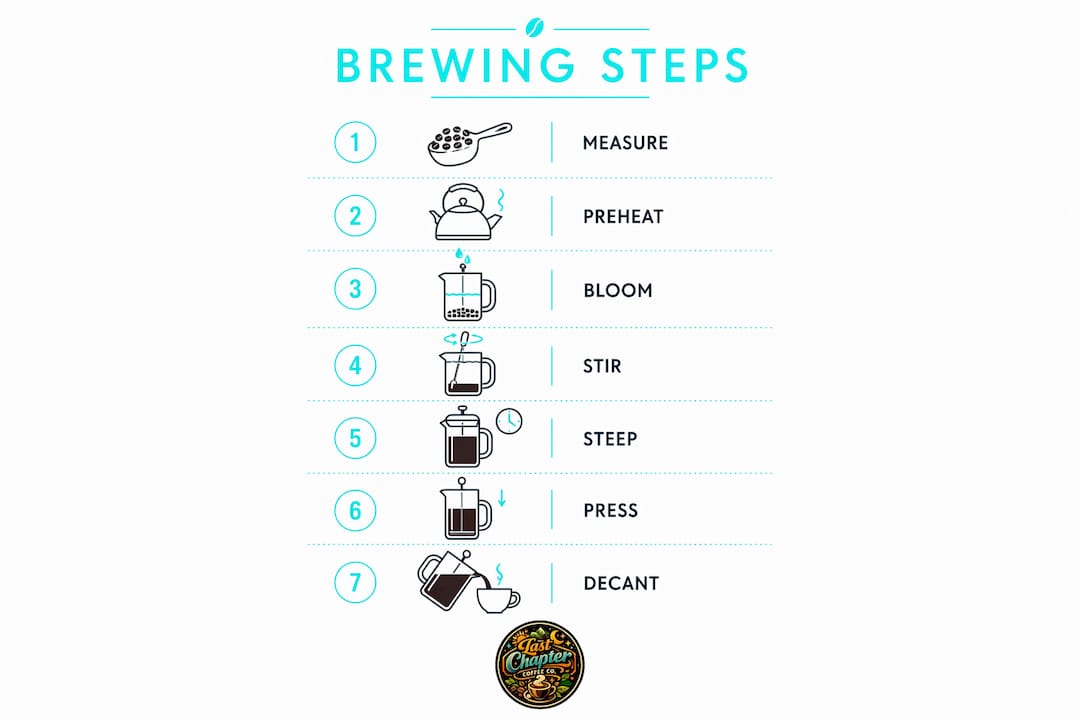
Step 1: Measure and grind your coffee
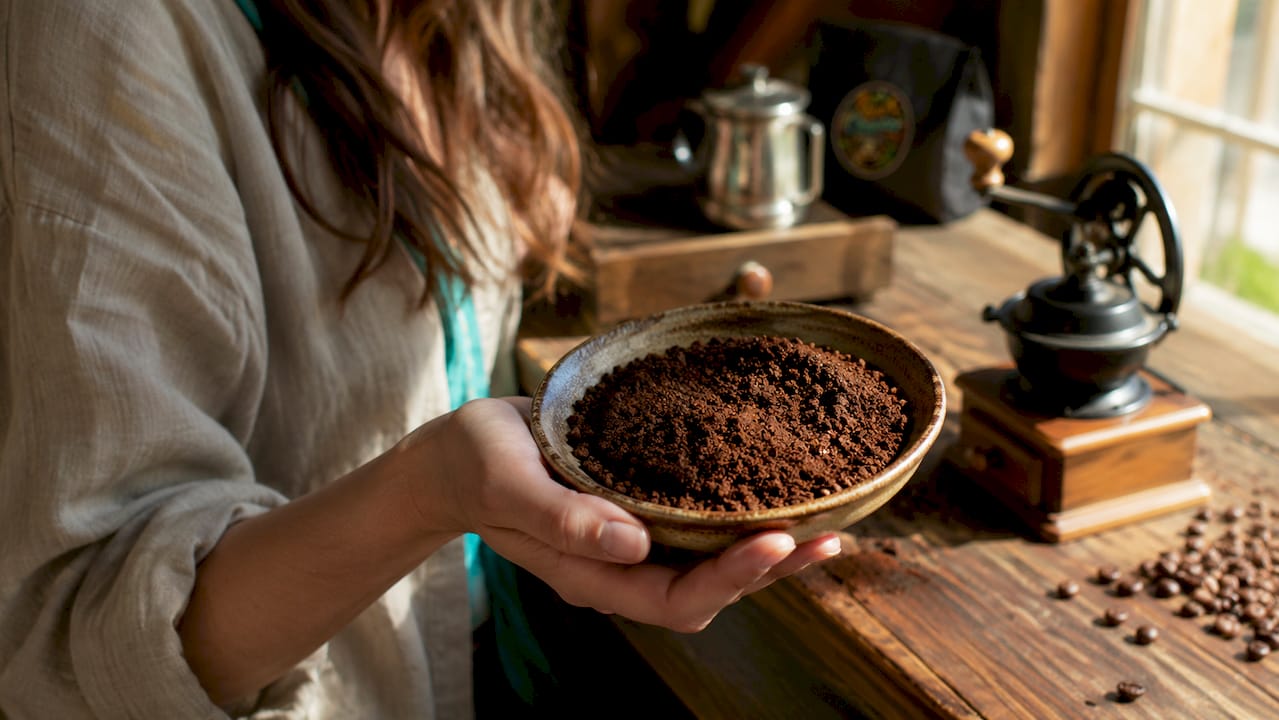
Set your scale to grams and weigh out your coffee. For a standard 34-ounce (1-liter) French press, use roughly 65 grams of coffee to 975 grams of water. For a smaller 12-ounce press, 25 grams of coffee to 375 grams of water works well.
Grind to a coarse size resembling kosher salt. That texture is the key to avoiding muddy, bitter coffee. A coarse grind gives water enough surface area to extract flavor without pulling harsh compounds from the grounds.
Step 2: Pre-heat and add grounds
Pour hot water into your empty French press, swirl it, and dump it out. This step takes 30 seconds and prevents your brew temperature from dropping during the steep. Add your measured grounds to the empty, pre-warmed carafe.
Step 3: The bloom pour
Boil your water, then let it sit off the heat for 30 seconds. That brings it into the 195–205°F range without a thermometer. Pour just enough water to saturate all the grounds, roughly twice the weight of your coffee. Wait 30 seconds.
Blooming the coffee releases trapped CO2 from the grounds. Fresh coffee contains a lot of it. If you skip the bloom, that gas creates uneven extraction and a slightly sour or hollow taste.
Step 4: Main pour and stir
Pour the remaining water in a slow, steady circle over the grounds. Fill to about an inch below the top of the carafe. Give the slurry one gentle stir with your spoon to make sure all grounds are fully saturated. Place the lid on top with the plunger pulled all the way up. Do not press yet.
Step 5: Steep for exactly 4 minutes
Start your timer the moment you finish pouring. The 4-minute steep is the most widely tested standard for balanced extraction. Less time produces sour, underdeveloped coffee. More time pulls bitter compounds from the grounds.
Pro Tip: If your coffee tastes sour at 4 minutes, grind slightly finer next time. If it tastes bitter, grind coarser. The steep time stays fixed. The grind is your adjustment dial.
Step 6: Press slowly and decant immediately
When the timer goes off, press the plunger down slowly over about 20 seconds. Steady, even pressure keeps the grounds below the mesh and reduces sediment in your cup. If you feel strong resistance, stop. Forcing the plunger stirs up fine particles and sends them into the coffee.
Pour all the coffee into a separate carafe or directly into cups right away. Leaving brewed coffee sitting on the grounds continues the extraction. That is what turns a good cup bitter within minutes.
What are the most common French press mistakes?
French press brewing is forgiving in some ways and unforgiving in others. Leaving coffee on the grounds too long is the most common mistake home brewers make. Here are the others worth knowing.
- Grinding too fine. Fine grounds slip through the metal mesh and create a muddy, gritty cup. They also over-extract quickly, producing harsh bitterness.
- Grinding too coarse. Overly coarse grounds under-extract, leaving the coffee weak, sour, and flat.
- Water too hot. Water above 205°F scorches the grounds and pulls bitter, astringent flavors.
- Water too cool. Water below 195°F under-extracts the coffee, leaving it sour and thin.
- Steeping too long. Every minute past 4 adds bitterness. Decant immediately when the timer ends.
- Pressing too fast. Slamming the plunger down in 2 seconds stirs the grounds and clouds the cup.
- Not decanting after pressing. The grounds keep releasing compounds into the liquid even after the plunger is down.
Pro Tip: Beginners can avoid bitterness and sludge by adjusting grind coarseness and monitoring water temperature strictly. Those two variables fix 90% of bad French press coffee.
How do you adjust your French press for stronger or cleaner coffee?
The standard 1:15 ratio and 4-minute steep produce a balanced, medium-strength cup. Adjusting either variable shifts the result significantly.
For stronger coffee:
- Move to a 1:12 or 1:13 ratio (more coffee, same water).
- Keep the grind and steep time the same.
- Avoid steeping longer to chase strength. That adds bitterness, not flavor.
For a cleaner, clearer cup:
- Add a paper filter beneath the metal mesh screen before plunging. It traps fine oils and sediment that normally pass through.
- Try the no-plunge method: after steeping, skim the foam, wait 5–8 minutes for grounds to settle, then pour gently through the filter.
- Use a slightly coarser grind to reduce the amount of fine particles in the cup.
The trade-off is real. Paper filtration removes the oils that give French press coffee its signature body and mouthfeel. The result is closer to a pour-over in texture. Neither style is wrong. They serve different preferences.
| Goal | Adjustment |
|---|---|
| Stronger cup | Use a 1:12 ratio; keep steep time at 4 minutes |
| Cleaner cup | Add paper filter under mesh; use coarser grind |
| Less sediment | Press slowly; decant immediately; try no-plunge method |
| Lighter body | Lower ratio (1:16 or 1:17); paper filter optional |
Key takeaways
French press coffee requires four fixed variables: a 1:15 ratio, coarse grounds, water at 195–205°F, and a 4-minute steep with immediate decanting.
| Point | Details |
|---|---|
| Use the 1:15 ratio | Measure by weight, not scoops, for consistent results every brew. |
| Grind coarse | Match the texture of kosher salt to avoid bitterness and sediment. |
| Control water temperature | Let boiling water rest 30 seconds to hit the 195–205°F target. |
| Steep exactly 4 minutes | Set a timer and decant immediately to stop extraction at the right point. |
| Press slowly | Take about 20 seconds on the plunger to keep grounds below the mesh. |
What I have learned from years of French press brewing
The French press is the most honest brewer in the kitchen. It hides nothing. Every variable you get wrong shows up directly in the cup, which makes it a great teacher.
The mistake I see most often is treating the steep time as flexible. People let the coffee sit while they get dressed or answer a message, then wonder why it tastes harsh. The 4-minute mark is not a suggestion. Set the timer before you pour.
The second thing I have learned is to trust resistance during the plunge. If the plunger fights you, stop and wait 10 seconds. Forcing it never ends well. The grounds compact better with patience than with pressure.
I also recommend keeping your French press spotlessly clean. Coffee oils build up on the mesh and carafe walls and turn rancid within a day or two. That rancid oil flavor is subtle but real, and it ruins otherwise good coffee. Disassemble the plunger after every use and rinse everything with hot water.
Finally, do not be afraid to experiment with your ratio once you have the basic process locked in. The 1:15 standard is a starting point, not a rule. Some people love 1:13 for its richness. Others prefer 1:17 for a lighter morning cup. The French Roast from Lastchaptercoffee, for example, opens up beautifully at a slightly stronger ratio because the dark roast oils carry more weight in the cup.
— Rogee
Premium blends worth brewing in your French press

The coffee you put in the press matters as much as the technique. Lastchaptercoffee offers blends built for home brewers who want real flavor, not generic grocery-store beans. The African Kahawa Blend delivers a bright, layered cup with natural sweetness that holds up beautifully at the 1:15 ratio. For a bolder, heavier brew, the Max Caf Blend is built for people who want serious body and a long finish. Both ship free within the US and arrive freshly roasted. If you want to try something outside your usual rotation, the specialty mushroom medium roast is a genuinely interesting cup for French press.
FAQ
What is the best coffee-to-water ratio for a French press?
The standard ratio is 1:15, meaning 1 gram of coffee for every 15 grams of water. For stronger coffee, move to 1:12 or 1:13 while keeping the same steep time.
How coarse should I grind coffee for a French press?
Grind to a coarse texture that resembles kosher salt. Finer grounds slip through the mesh filter and produce a gritty, bitter cup.
Why does my French press coffee taste bitter?
Bitterness almost always comes from over-extraction. The most common causes are steeping longer than 4 minutes, grinding too fine, or leaving coffee on the grounds after pressing.
Can I use a paper filter in a French press?
Yes. Placing a flat paper filter beneath the metal mesh screen before plunging reduces sediment and oils, producing a cleaner, clearer cup similar in texture to pour-over coffee.
How do I make stronger coffee in a French press?
Use a tighter ratio like 1:12 or 1:13 and keep the grind coarse and the steep time at exactly 4 minutes. Steeping longer to chase strength adds bitterness rather than flavor.


