

If you’ve ever assumed coffee is just coffee, medium roast is about to change your mind. Roasting transforms raw green beans into the aromatic, flavorful cups we reach for every morning, and the level of roast shapes everything from sweetness to body to aroma. Medium roast sits right in the middle of the spectrum, and that position is no accident. It’s where balance lives. This guide walks you through what medium roast actually is, what it tastes like, how it compares to other roasts, and how to brew it in a way that brings out every note worth savoring.
Table of Contents
- What defines a medium roast?
- Flavor profiles and aroma of medium roast
- Medium roast vs. other roasts: How do they compare?
- Brewing tips and best practices for medium roast
- Why medium roast is the coffee lover’s sweet spot
- Explore premium medium roasts with Last Chapter
- Frequently asked questions
Key Takeaways
| Point | Details |
|---|---|
| Balanced flavor profile | Medium roast coffee offers a harmonious blend of acidity, sweetness, and body for approachable enjoyment. |
| Versatility in brewing | Medium roast adapts well to various brewing methods, from drip to French press to espresso. |
| Flavor clarity | The roasting process preserves origin flavors while adding subtle caramel and nutty notes. |
| Pairs with foods | Medium roast matches perfectly with pastries, breads, and other breakfast favorites. |
What defines a medium roast?
With a taste for adventure, let’s uncover what medium roast actually means and how it fits among other roast levels.
Roasting coffee is a precise process. Medium roast beans reach temperatures between 410°F and 430°F, a range that balances acidity and sweetness without pushing the bean into darker, smokier territory. At this stage, the bean’s natural sugars caramelize just enough to add sweetness, while the origin flavors from the farm where the bean grew still come through clearly. That dual quality is what makes medium roast so appealing.
Physically, medium roast beans have a rich, warm brown color. They’re dry to the touch, not oily like dark roast beans. The surface is smooth, and the aroma is sweet and slightly toasty. If you pick up a handful of medium roast beans and smell them, you’ll notice hints of caramel, nuts, or even mild chocolate. That smell is a reliable preview of what’s in your cup.
The coffee roasting process moves through distinct stages. Light roast stops early, preserving high acidity and bright, sometimes fruity flavors. Dark roast pushes further, burning off acidity and origin character in favor of bold, smoky notes. Medium roast lands between those two extremes, keeping enough acidity to feel lively while developing enough body and sweetness to feel satisfying.
| Roast level | Temperature | Acidity | Body | Flavor notes |
|---|---|---|---|---|
| Light | 356°F to 401°F | High | Light | Fruity, floral, bright |
| Medium | 410°F to 430°F | Moderate | Medium | Nutty, chocolate, caramel |
| Dark | 437°F to 482°F | Low | Full | Smoky, bold, bitter |
Key physical traits of medium roast beans:
- Color: Rich medium brown, no oily sheen
- Texture: Dry and smooth on the surface
- Aroma: Sweet, toasty, with caramel or nut undertones
- Size: Slightly expanded compared to light roast
Pro Tip: When shopping for beans, look for that dry, medium brown surface. If the bag feels greasy through the packaging or the beans look very dark, you’re likely holding a dark roast. If the beans look pale tan, it’s a light roast. Medium roast hits that warm chocolate brown sweet spot.
For those who enjoy exploring coffee flavors, medium roast is often the most rewarding starting point because it showcases both the bean’s origin and the roaster’s craft in equal measure.
Flavor profiles and aroma of medium roast
Now that we know what medium roast is, let’s dive into the flavors and aromas that set it apart.
Medium roast is where coffee gets interesting. The flavors are layered rather than one-dimensional. You’ll often find chocolate and cocoa notes up front, followed by a nutty middle, and sometimes a subtle fruit finish depending on where the bean was grown. Ethiopian beans roasted to medium might carry berry or stone fruit undertones. Colombian beans at the same roast level often lean toward caramel and mild citrus.
Medium roast offers a harmonious blend of acidity and body, making it ideal for highlighting both origin flavors and caramelized sweetness. That’s the key insight: medium roast doesn’t erase where the bean came from. It amplifies it while adding its own layer of roasted complexity.
“The best medium roasts feel like a conversation between the farm and the roaster. Neither one dominates.”
Here’s a look at how different origin beans express themselves at medium roast:
| Bean origin | Primary flavor notes | Aroma characteristics |
|---|---|---|
| Colombia | Caramel, mild citrus | Sweet, nutty |
| Ethiopia | Berry, stone fruit | Floral, bright |
| Brazil | Chocolate, low acidity | Nutty, earthy |
| Guatemala | Brown sugar, apple | Toasty, mild spice |
The aroma of medium roast is one of its most underappreciated qualities. It’s sweet without being cloying, and complex without being sharp. When you brew a medium roast, the steam carries those caramel and nut notes into the room before you even take a sip.
Common flavor and aroma notes in medium roast:
- Chocolate and cocoa: Smooth, not bitter
- Nuts: Almond, hazelnut, walnut undertones
- Mild fruit: Citrus or berry depending on origin
- Caramel and brown sugar: From the caramelization during roasting
- Toasty warmth: A gentle roasted quality without smokiness
Pro Tip: To really taste what’s in your cup, try sipping your medium roast black first. Let it cool slightly, around 150°F, before your first sip. Cooler coffee reveals more flavor nuance. Once you’ve identified the base notes, then add milk or sweetener if you prefer.
If you want to experience the range of what medium roast can do, the unique medium roast blends at Last Chapter Coffee are a great way to taste how different ingredients and origins interact at this roast level.
Medium roast vs. other roasts: How do they compare?
Understanding medium roast’s flavor begs the question: How does it stack up against its light and dark siblings?
Medium roast retains more of the coffee bean’s original flavor than dark roast, while offering less acidity than a light roast. That positioning makes it the most versatile roast level by a wide margin. Light roast fans love the brightness and complexity, but many find it too sharp or thin-bodied. Dark roast fans enjoy the boldness, but the smokiness can mask everything the bean originally had to offer.
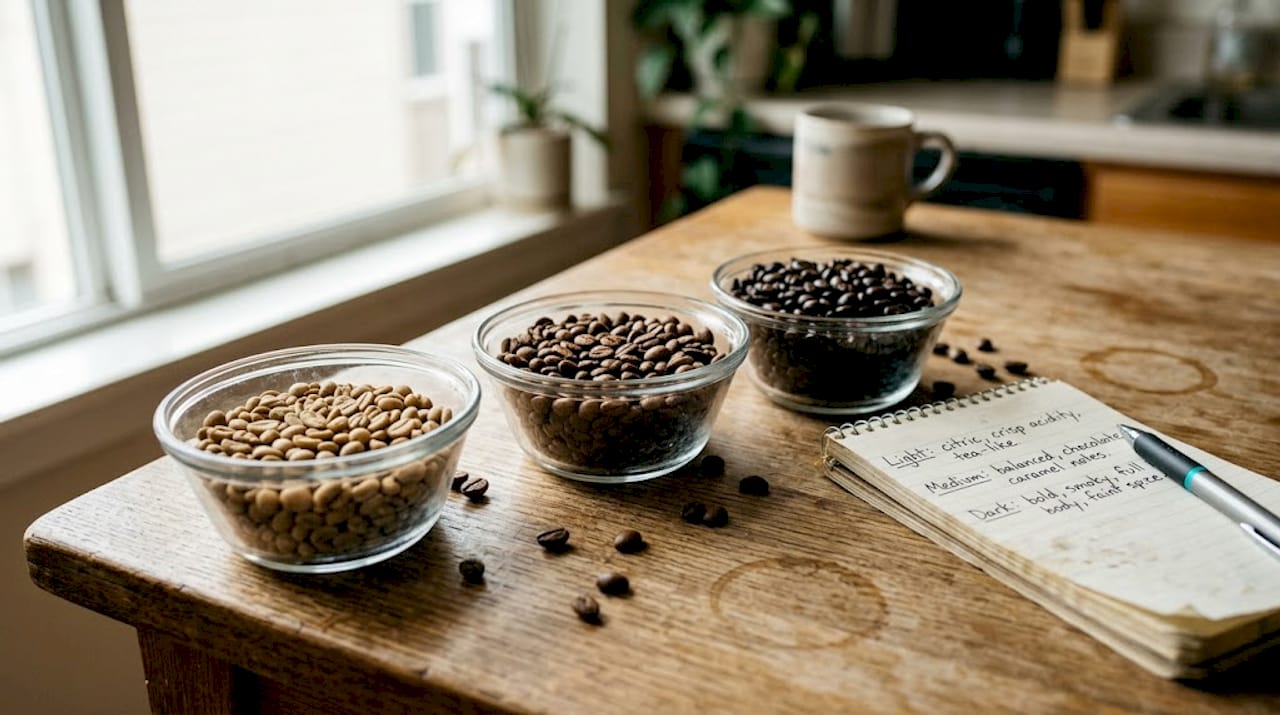
Industry surveys consistently show that medium roast is the most popular choice among American coffee drinkers, with roughly 35% of consumers identifying it as their preferred roast level. It’s not hard to see why. It works across brewing methods, it suits a wide range of palates, and it’s forgiving to brew.
| Feature | Light roast | Medium roast | Dark roast |
|---|---|---|---|
| Acidity | High | Moderate | Low |
| Body | Light | Medium | Full |
| Oiliness | None | Minimal | High |
| Origin flavor | Very present | Present | Mostly lost |
| Roast flavor | Minimal | Balanced | Dominant |
Brewing methods that shine with each roast:
- Light roast: Pour-over and Chemex, which highlight delicate acidity and clarity
- Medium roast: Drip coffee maker, French press, and AeroPress for balanced extraction
- Dark roast: Espresso and moka pot, where bold flavors hold up against pressure and heat
Medium roast is particularly well suited for drip brewing because its moderate grind size and balanced extraction profile make it easy to dial in without over or under extracting. If you’re curious about the bolder end of the spectrum, exploring dark roasts can give you a clear sense of how much the roast level changes the drinking experience.
For those who want to see the full range of what’s available, browsing a curated coffee selection side by side is one of the most effective ways to understand what roast level fits your taste.
Brewing tips and best practices for medium roast
Once you’ve settled on a medium roast, brewing it right is where the magic happens.
Brewing medium roast well comes down to three variables: grind size, water temperature, and brew time. Get these right and the cup will reward you. A medium grind and water temperature of around 200°F are optimal for extracting balanced flavors from medium roast coffee. Water that’s too hot will over-extract, pulling bitter compounds. Water that’s too cool will under-extract, leaving the cup flat and sour.
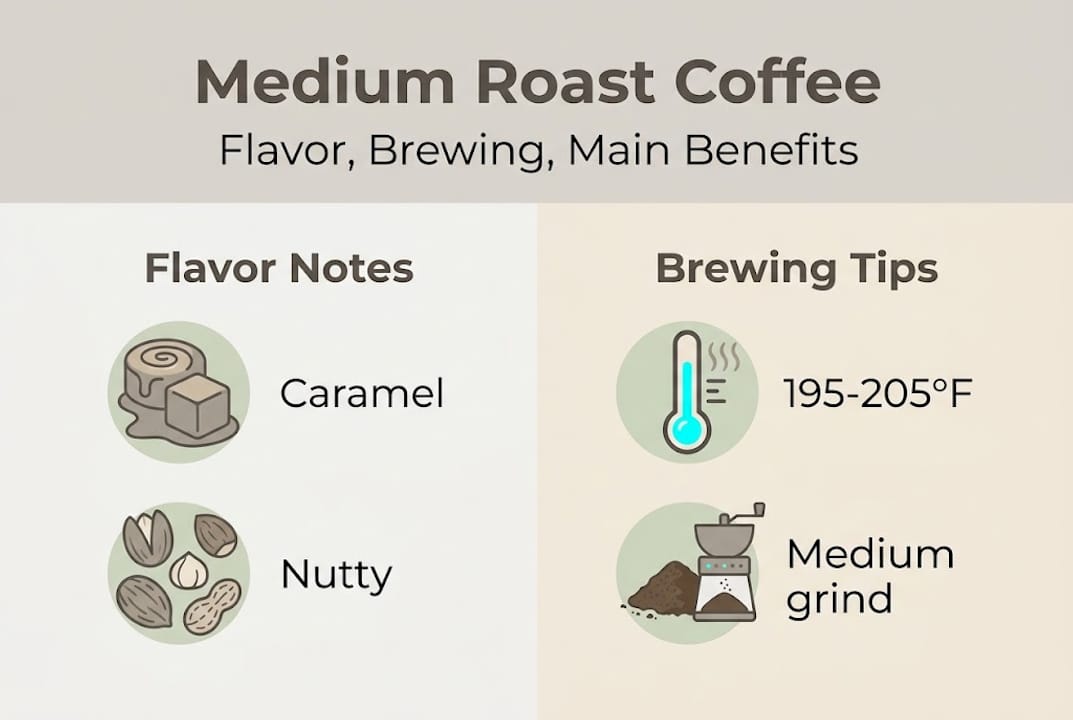
Grind size matters more than most people realize. A medium grind, similar in texture to coarse sand, gives water enough surface area to extract flavor without pulling too much in too little time. If your cup tastes bitter, try a slightly coarser grind. If it tastes weak or sour, go slightly finer.
Best tools for brewing medium roast:
- Drip coffee maker: Consistent, easy, and ideal for daily brewing
- French press: Produces a fuller body and rich mouthfeel
- AeroPress: Fast, versatile, and great for travel or small batches
- Pour-over: Highlights clarity and subtle origin notes
- Chemex: Clean, bright cups with excellent aroma expression
Brew time also plays a role. For drip and pour-over, aim for a total brew time of three to four minutes. French press works best with a four minute steep before pressing. AeroPress can go as short as one to two minutes depending on your preferred strength.
Pro Tip: Medium roast pairs beautifully with breakfast foods. Try it alongside a buttery croissant, almond biscotti, or a slice of banana bread. The nutty, caramel notes in the coffee mirror the flavors in baked goods, creating a pairing that feels intentional rather than accidental.
For those looking to experiment further, medium roast specialty options can introduce new dimensions to your morning cup without changing your brewing routine.
Why medium roast is the coffee lover’s sweet spot
With practical brewing know-how under your belt, it’s time to step back and consider the bigger picture: Why does medium roast inspire such devotion?
Here’s a perspective that doesn’t get enough attention: medium roast is often dismissed as the “safe” choice, as if preferring balance over extremes is somehow less sophisticated. That framing is wrong. Choosing medium roast isn’t playing it safe. It’s recognizing that coffee at its best is a conversation between origin, process, and roast, and medium roast is the only level where all three get equal time to speak.
There’s also a persistent myth worth addressing: darker roast means stronger coffee, and stronger coffee means more caffeine. Neither is true. Caffeine content is nearly identical across roast levels. What changes is flavor intensity, not stimulant content. A bold dark roast and a bright light roast have roughly the same caffeine per gram of coffee. Medium roast sits in that same range.
For those who want the energy boost with a balanced flavor profile, a high-caffeine medium roast can deliver both without sacrificing taste. Medium roast is where casual drinkers and passionate enthusiasts meet on common ground, which is exactly why it remains the most widely loved roast level in the country.
Explore premium medium roasts with Last Chapter
If you’re ready to put your new understanding to work, here’s where you can discover exceptional medium roasts.
At Last Chapter Coffee, we’ve built our medium roast lineup around the idea that balance should never mean boring. Our medium roast with mushrooms brings an unexpected depth to your morning cup, blending the smooth, nutty character of medium roast with functional mushroom extracts for a brew that’s as interesting as it is satisfying.
If you want more caffeine without sacrificing flavor, the Max Caf Blend medium roast is crafted for exactly that. Every order ships free within the US, and fulfillment is fast so your beans arrive fresh. Ready to explore everything we offer? Browse all coffee options and find the medium roast that fits your morning.
Frequently asked questions
Is medium roast coffee stronger in flavor than light or dark roast?
Medium roast delivers a fuller, more balanced flavor than light roast and is less bold and smoky than dark roast, landing it squarely in the middle. Its balanced acidity and sweetness make it the most approachable roast for a wide range of palates.
Does medium roast have more caffeine than other roasts?
Caffeine levels stay nearly the same across all roast levels, so medium roast won’t give you a noticeably bigger boost than light or dark. Caffeine is not significantly affected by how long the bean is roasted.
What foods pair best with medium roast coffee?
Medium roast’s nutty, caramel notes pair naturally with pastries, breads, and mild cheeses. Its mild profile matches easily with bakery goods and breakfast foods without overpowering them.
How can you tell if coffee is medium roast?
Look for a warm, rich brown color on the bean surface with no oily sheen, and smell for sweet, caramel, or nutty aromas. Bean color and aroma are the most reliable indicators of roast level before you even brew a cup.


