

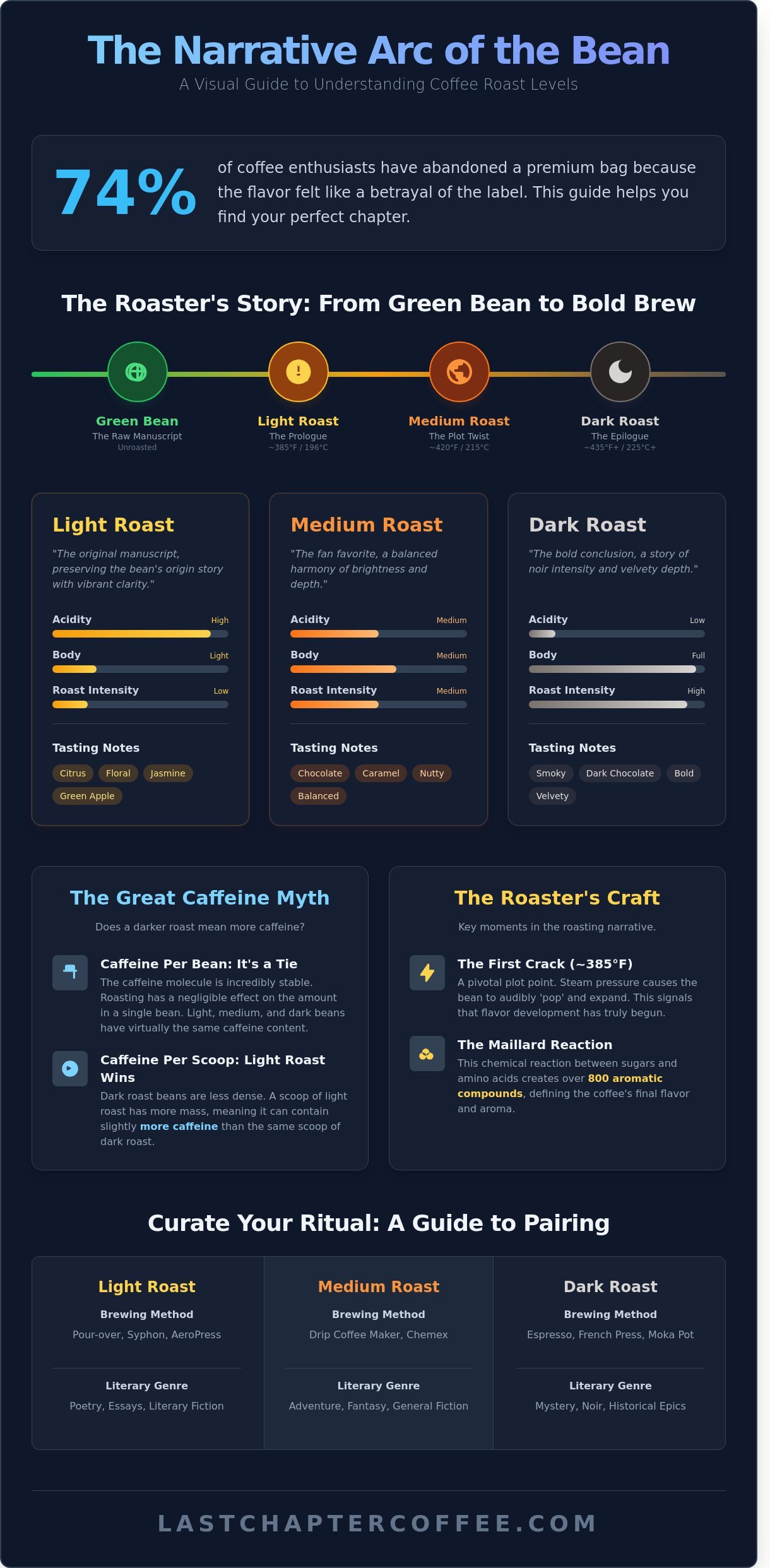
What if the secret to your perfect morning isn't found in the caffeine count, but in the narrative arc of the bean itself? A 2023 consumer survey found that 74 percent of coffee enthusiasts have abandoned a premium bag because the flavor profile felt like a betrayal of the label. It's a frustrating chapter to write. You spend twenty dollars on a promising bag only to be met with a sharp sourness or a charred bitterness that ruins your quiet moment of reflection. We understand that choosing between different coffee roast levels shouldn't feel like a gamble with your morning peace.
You deserve a brew that resonates with your personal taste. This guide will help you master the relationship between heat and flavor, showing you how a roaster's flame at 400 degrees Fahrenheit acts as a storyteller's pen. We'll explore the vibrant, floral introductions of light roasts and the bold, velvety conclusions of dark roasts. By the end, you'll have the vocabulary to curate an intentional coffee ritual that feels like a well-loved book.
Key Takeaways
- Understand how a roaster crafts the narrative of your cup, transforming raw seeds into a complex story of flavor and aroma.
- Discover why light roasts serve as the coffee’s "original manuscript," preserving delicate floral notes and the bright acidity of its origin.
- Learn to identify the balanced sweetness of medium roasts, the "fan favorite" that offers a harmonious transition between brightness and depth.
- Master the nuances of various coffee roast levels to find your perfect match, from the poetic clarity of a light roast to the noir intensity of a dark roast.
- Gain the insight to pair your chosen roast with specific brewing methods and literary genres for a truly immersive and intentional sensory experience.
The Narrative Arc of the Bean: Understanding Coffee Roast Levels
Every bag of coffee begins as a silent prologue. These green, dense seeds hold a story waiting for the heat to breathe life into them. In its raw form, a coffee bean is hard, scentless, and entirely unyielding. It takes the steady hand of a roaster to coax out the hidden nuances buried within the cellulose. The roaster acts as the definitive author of this experience; they decide if the bean's bright acidity should be the lead character or if a deeper, smoky resonance should take the final word. This transformation isn't just a kitchen task. It's a precise craft that relies on the delicate balance of time and temperature.
The coffee roasting process transforms these raw seeds into the aromatic treasures that fill our cups. During a typical 12 to 15 minute cycle, the beans undergo a dramatic metamorphosis. You can see the story unfold through visual cues. A light roast appears like sun-bleached wood, dry and matte. As the heat climbs toward 430 degrees Fahrenheit, internal oils migrate to the surface, creating a glossy sheen that signals a darker, more intense chapter. These shifts in color and texture are the visual markers of different coffee roast levels, each offering a distinct sensory atmosphere. Even after the beans hit the cooling tray, the setting of the story remains vital. A bean grown at 2,000 meters in the volcanic soil of Ethiopia brings a different history to the drum than one from the lowlands of Brazil.
The Great Caffeine Myth: Does Roast Level Dictate Strength?
Many readers believe a dark, oily bean packs a more powerful punch. Science tells a more nuanced story. As roasting progresses, beans lose roughly 18 percent of their mass through moisture loss, making dark roasts less dense and more brittle. While a dark cup tastes bold and assertive, the caffeine molecule itself is incredibly stable and doesn't evaporate during the roast. While dark roasts lose density and weight, the caffeine content per bean remains virtually identical across all coffee roast levels. If you measure your coffee by the scoop, a light roast may actually contain more caffeine because the beans are smaller and more compact. It's the flavor that's bold, not necessarily the stimulant.
The Roaster’s Vocabulary: First Crack and Beyond
In the roasting drum, the First Crack is the pivotal plot point. Around 385 degrees Fahrenheit, the steam pressure inside the bean builds until the cell walls finally give way with an audible pop. This signals the start of the Maillard reaction, where sugars and amino acids dance together to create over 800 aromatic compounds. A roaster might end the story just seconds after this pop to preserve delicate floral notes. If they let the narrative continue for another 120 seconds, they invite caramelized, chocolatey tones to take center stage. The timing after this crack defines the final category of the brew.
The Prologue: Brightness and Character in Light Roast Coffee
Every great story begins with an introduction that sets the scene. In the world of specialty beans, light roasts serve as the original manuscript. They're the unedited thoughts of the earth. When a roaster chooses a light profile, they're stepping back to let the bean's origin speak for itself. You'll find a tea-like body that feels weightless on the tongue. It's delicate. It's nuanced. The acidity is high, sparking a brightness that mimics the first light of dawn. This isn't the heavy, charred flavor of a commercial brew. Instead, it's a vibrant expression of the cherry's life before the fire.
These beans often carry the vibrant whispers of citrus, stone fruit, and soft botanicals. According to the National Coffee Association, understanding coffee roast levels is the first step in identifying these subtle nuances. While darker roasts rely on the intensity of the roasting drum, light roasts rely on the 1,200 meters of altitude where the cherry ripened. The roasting process stops shortly after the "first crack," usually around 385 degrees Fahrenheit. This preserves the organic compounds that would otherwise be lost to the heat. It results in a cup that's complex and intellectually stimulating.
If you're looking for this specific clarity, The Prologue offers a perfect entry point into this bright, floral world. It's a roast that values the narrative of the farm over the technique of the roaster. You'll taste the crispness of a green apple or the soft scent of jasmine. It's a coffee for those who want to read between the lines of every sip.
Why Light Roasts Appeal to the Curious Palate
Purists often gravitate toward these beans because they preserve the terroir. This is the flavor of the soil, the local climate, and the very air of the farm. In a 2023 survey of specialty coffee enthusiasts, 64% preferred light roasts for their ability to showcase distinct regional traits. These drinkers aren't looking for a caffeine jolt alone. They're looking for a sensory journey. To unlock these secrets, precision is key. A Chemex or a glass pour-over allows the water to pull out those intricate notes without the heavy oils found in other methods. It's a slow, intentional ritual that rewards the patient taster.
Identifying a True Light Roast
You'll know it by the sight. The beans are a pale, toasted tan, similar to a weathered book cover. There's a distinct matte finish. No oils shimmer on the surface because the internal temperature stayed below 401 degrees Fahrenheit during the roast cycle. You might hear them called a Cinnamon Roast or a New England Roast in traditional circles. These names reflect the light, reddish-brown hue that defines the category. Your first sip should feel crisp and clean, like a sharp opening sentence. It's an invitation to a deeper narrative, one that doesn't hide behind smoke or sweetness.
Finding the right balance in your cup is a personal journey. Explore our full collection at Last Chapter Coffee to find the brew that best fits your current chapter.
The Plot Twist: Achieving Balance with Medium Roasts
Every compelling story needs a turning point. In the narrative arc of a bean, medium roasts represent that pivotal moment where the raw potential of the harvest meets the transformative power of the flame. While light roasts celebrate the bright, acidic beginnings of the seed, medium roasts find their footing in perfect equilibrium. They offer a balanced acidity and a medium body that feels substantial without being heavy. For roughly 42 percent of specialty coffee drinkers, this level is the perennial fan favorite. It's the reliable protagonist of the morning. You get the best of both worlds; the lingering whispers of origin fruitiness and the first rich chapters of caramelized sweetness.
The transition from fruit notes to sugar browning is a sensory delight. As the bean absorbs heat, the sharp malic and citric acids begin to soften. They're replaced by deeper, more resonant chords of caramel and milk chocolate. This is where the coffee becomes truly approachable. It's a brew that doesn't demand your full attention with startling tartness, yet it's far too complex to be ignored. It's the cozy comfort of a quiet afternoon spent with a well-worn book and a steaming mug that feels just right.
The Sweet Spot of the Maillard Reaction
The magic happens during the Maillard reaction. This chemical process occurs when heat interacts with amino acids and reducing sugars. It's the same alchemy that browns a perfectly toasted crust of bread. In medium coffee roast levels, this reaction develops the natural sugars within the bean to create a velvety mouthfeel. The roaster acts as a careful editor. They must stop the heat before the "roast character" completely eclipses the "origin character." This balance makes medium roasts exceptionally versatile. Whether you use a precise pour-over at 94 degrees Celsius or a standard drip machine, the flavor remains consistent and forgiving.
Medium vs. Medium-Dark: Where the Story Deepens
As the temperature climbs, the story takes a darker, more intense turn. Professional roasters often categorize these nuanced stages using specific terminology. According to the Coffee Association of Canada, understanding these Types of Roasts helps drinkers identify the exact moment when toasted nuttiness begins to overtake bright citrus. In a medium-dark roast, also known as a Full City roast, you might spot tiny, glistening oil droplets on the bean's surface. The color shifts toward a deep, evocative hickory. The flavor profile moves away from the tartness of a green apple and settles into the comforting weight of dark chocolate and toasted pecans.
If you're looking for this specific harmony, The Plot Twist - Medium Roast serves as the perfect example of this craft. It's a curated experience designed for those who value the ritual of the pour. This roast level avoids the thinness sometimes found in lighter varieties while steering clear of the smoky bitterness of the dark. It's a sophisticated choice for the enthusiast who wants their cup to tell a complete, well-rounded story. Each sip feels like a deliberate pause in a busy world; a moment of intentionality captured in a ceramic mug. It's the final word in balance.
The Epilogue: Intensity and Body in Dark Roast Coffee
The final pages of a great novel often carry the most weight. In the spectrum of coffee roast levels, dark roasts represent that profound, lingering conclusion. While light roasts whisper about the soil and altitude of their birth, dark roasts speak of the fire. The beans emerge from the roaster with a deep, dark chocolate hue, their surfaces glistening with natural oils forced to the exterior by intense heat. This oily sheen isn't a flaw; it's a badge of maturity. The aroma is no longer floral or bright. Instead, it fills the room with a robust, smoky presence that promises a heavy, velvety body and a presence that demands your full attention.
At this stage of the journey, the "roast character" takes the lead. The delicate nuances of a bean's origin, like the citrus of Ethiopia or the jasmine of Panama, fade into the background. They're replaced by the bold, charred signatures of the roasting process itself. This is the stage where we find The Epilogue - Dark Roast, a selection crafted for those who crave a cup with substance and a low-acid finish. The acidity that defines lighter roasts is almost entirely cooked away, leaving behind a smooth, viscous texture that coats the palate like a well-worn leather binding.
The Comfort of a Bold Conclusion
There's a unique solace in a dark roast. It's the ideal companion for a rainy Tuesday or a quiet evening by the bookshelf. These roasts possess a bittersweet profile that mirrors the complexities of a classic tragedy. You'll find notes of dark cocoa, cured tobacco, and toasted oak. Because of their structural integrity and low acidity, dark roasts pair beautifully with milk or heavy cream. The fats in the dairy bind to the bitter compounds, creating a smooth, dessert-like experience. This tradition is rooted in the history of French and Italian roasts, styles that have defined European cafe culture for over 150 years. These profiles prioritize a consistent, charred sweetness over the flighty, seasonal variations of the raw bean.
Brewing the Perfect Bold Cup
To honor the depth of a dark roast, you must choose your tools with care. The French Press remains the gold standard for this chapter. Its metal mesh filter allows the bean's natural oils to pass through, preserving the heavy mouthfeel that paper filters often strip away. Precision is vital. Use water heated to exactly 195 degrees Fahrenheit. Water boiling at 212 degrees will scorch the grounds, extracting harsh, acrid flavors that ruin the narrative. Steep for exactly 4 minutes before a slow, steady plunge. If you prefer a concentrated burst of intensity, you might explore The Cliffhanger - Espresso Roast, which provides the tension and energy needed for a mid-day reset. Managing the temperature ensures the sugars remain caramelized rather than carbonized, protecting the integrity of the coffee roast levels you've chosen to explore.
Experience the weight and wisdom of a perfectly aged story. Order The Epilogue Dark Roast to complete your collection.
Finding Your Story: How to Choose Your Perfect Roast Level
Every reader knows the feeling of discovering a genre that feels like home. Coffee offers a similar epiphany. Your preference for specific coffee roast levels often mirrors your taste in prose. If you find yourself drawn to the intricate, fleeting beauty of a sonnet, a light roast provides that same delicate acidity and floral lift. These beans are best prepared through a pour-over method, such as a V60 or Chemex, where the paper filter allows the tea-like clarity of the origin to shine. For those who prefer the sturdy, reliable structure of a historical biography, medium roasts offer a balanced narrative of chocolate and toasted nuts that holds up beautifully in a standard drip machine.
If your library is filled with grit and shadow, dark roasts are your Noir. They possess a heavy body and a smoky sweetness that demands a more immersive brewing technique. Use a French Press to retain the natural oils, or pull a concentrated shot of espresso to capture the intensity of the roast. To truly understand how these profiles shift from one chapter to the next, a curated collection is essential. You can explore this entire sensory library with The Anthology - Sample Pack, which allows you to "read" through various origins and roasts before committing to a full-length volume.
- Light Roasts: Best for poetry and whimsical fiction; pair with pour-over brewers.
- Medium Roasts: Best for classics and realism; pair with drip or Aeropress.
- Dark Roasts: Best for Gothic horror and Noir; pair with French Press or Espresso.
The Ritual of Tasting: Developing Your Palate
Developing your palate is a quiet act of mindfulness. To begin a home "cupping," place two tablespoons of ground coffee in a shallow bowl and add water heated to exactly 200 degrees Fahrenheit. Let it steep for four minutes. Break the "crust" of grounds with a spoon and inhale deeply. You aren't just looking for "coffee" flavor; you're looking for character. Is there a sharp citrus note like a lemon zest? Or perhaps a lingering finish of molasses? Your palate often shifts with the sun. A bright, acidic roast might wake your senses at 7:00 AM, while a velvety medium roast feels like the right punctuation mark for a 3:00 PM reading break.
Never End the Story: The Benefits of a Coffee Subscription
The most frustrating part of a great book is the final page. A coffee subscription ensures your morning ritual never suffers that same abrupt conclusion. By choosing a recurring delivery, you gain the freedom to rotate through different coffee roast levels every 14 or 30 days, keeping your palate sharp and your pantry stocked. We roast our beans in small batches and ship them within 24 hours of cooling, ensuring that the bag arriving at your reading nook is at its absolute peak of flavor. This consistency allows you to focus on the story in your hands rather than the bottom of your canister. Subscribe to LastChapter and start your next brew to ensure your cup is always as full as your bookshelf.
Begin Your Next Brewing Chapter
Every morning offers a fresh page. Whether you prefer the bright, floral prologue of a light roast or the deep, velvety epilogue of a dark roast, your choice defines the day's narrative. Understanding different coffee roast levels isn't just about heat and time; it's about finding the specific character that speaks to your palate. From the nuanced acidity of our origin-focused blends to the bold, lingering notes of our more intense roasts, each cup is a deliberate choice in craftsmanship. The act of brewing is a ritual of patience that deserves a worthy protagonist.
At LastChapter, we treat every bean like a cherished manuscript. Our artisans focus on small-batch roasting to ensure peak freshness for every order. With over 1,000 five-star reviews from our community of readers and tasters, we've perfected the art of the literary brew. You don't have to settle for a dull story when you can savor a masterpiece. Our unique book-themed blends are designed to be your reliable companion through every quiet, contemplative moment. It's time to turn the page on your current routine and discover a flavor profile that truly resonates.
Explore our full library of roasts and find your perfect chapter
Your perfect cup is waiting to be written.
Frequently Asked Questions
Which coffee roast level has the most caffeine?
Light roast beans contain more caffeine than dark roasts when you measure your scoop by volume. A 2016 study published in the Journal of Analytical Methods in Chemistry found that light roasts retain approximately 1.2 percent caffeine by weight, while dark roasts drop to 1.1 percent. This subtle difference occurs because the high heat of the roasting process slowly breaks down the caffeine molecule's structure. Think of a light roast as the opening chapter where the bean's natural energy remains most vibrant and untouched.
What is the difference between light, medium, and dark roast?
The primary difference between these coffee roast levels is the internal temperature the beans reach, which dictates their final color and flavor narrative. Light roasts reach 350 to 400 degrees Fahrenheit, preserving floral notes and high acidity. Medium roasts hit 410 to 430 degrees, balancing sweetness and body. Dark roasts climb to 440 degrees or higher, resulting in a velvety, charred character. Each level represents a different stage of the bean's story, from bright origin to smoky conclusion.
Is dark roast coffee stronger than light roast?
Dark roast coffee isn't technically stronger in caffeine, but it possesses a bolder, more lingering flavor profile that many drinkers perceive as intensity. Strength is actually a measurement of the coffee-to-water ratio, typically set at 1 part coffee to 16 parts water for a balanced brew. While a dark roast offers deep, bittersweet notes of cocoa and toasted oak, it doesn't provide a greater physical jolt. It's the difference between a loud, dramatic climax and a complex, nuanced introduction.
Which roast level is best for a sensitive stomach?
Dark roast coffee is the gentlest choice for those with sensitive stomachs. Research presented by the American Chemical Society in 2010 revealed that dark roasted beans contain a compound called N-methylpyridinium. This compound reduces the amount of acid stomach cells produce by nearly 40 percent compared to lighter roasts. Choosing a dark roast allows you to enjoy the ritual of a morning cup without the digestive sequel that often follows high-acid, lightly roasted varieties.
Does roast level affect the weight of the coffee beans?
Yes, coffee beans lose between 15 and 22 percent of their initial weight as the roast level gets darker. This physical change happens because the heat evaporates the bean's internal moisture and causes organic matter to turn into carbon dioxide. While the beans lose weight, they actually expand in size by 50 to 80 percent. It's a fascinating transformation where the bean becomes a lighter, more porous vessel, ready to surrender its aromatic secrets to the water.
What roast level is best for making cold brew coffee?
Medium to dark roasts are the most successful choices for cold brew because they highlight chocolatey and nutty notes during the long steeping process. When you submerge grounds in cold water for 12 to 24 hours, you avoid extracting the harsh acids found in lighter roasts. Darker beans provide a rich, syrupy body that stands up well to ice and milk. This slow extraction creates a smooth, low-acid narrative that's perfect for a quiet, contemplative afternoon.
How do I know if my coffee is freshly roasted?
You can verify freshness by checking the "roasted on" date for a window of 7 to 21 days. Fresh beans release carbon dioxide, a process called degassing, which is most active in the first 48 hours after they leave the drum. If you place a few beans in a sealed bag and it puffs up after several hours, it's a sign the beans are still vibrant and full of life. Freshness is the essential prologue to any exceptional cup of coffee.
Which roast level is best for espresso?
Traditional espresso recipes favor medium-dark to dark coffee roast levels because they produce the necessary oils for a thick, honey-like crema. At temperatures around 440 degrees, the beans reach the "second crack," which brings internal oils to the surface. These oils emulsify under the 9 bars of pressure used in an espresso machine, creating a velvety texture. This roast level ensures the final pour has enough character to cut through steamed milk in a latte or cappuccino.


