

Coffee bloom is defined as the rapid release of carbon dioxide gas when hot water first contacts freshly ground coffee, causing the grounds to bubble and swell visibly. This initial wetting phase, known in specialty coffee as the “pre-infusion” or bloom stage, lasts roughly 30–45 seconds before the main extraction begins. Skipping it produces uneven, flat-tasting coffee. Understanding the blooming process gives home brewers a direct, repeatable way to improve every cup they make.
What is coffee bloom and why does it happen?
Coffee bloom is caused by carbon dioxide trapped inside roasted coffee beans escaping when hot water hits the grounds. The CO2 forms during roasting as organic compounds inside the bean break down under heat. It gets locked inside the bean’s cellular structure until something disrupts it.
Grinding breaks that cellular structure open. The moment you grind coffee, CO2 begins escaping into the air. That is why pre-ground coffee blooms weakly or not at all. Freshly ground beans still hold a significant charge of gas, which releases all at once when hot water arrives.
Here is what happens at the chemical level during the coffee blooming process:
- CO2 is hydrophobic. It actively repels water. If it is not released before extraction, it creates dry pockets that block water from saturating the grounds evenly.
- Uneven saturation causes channeling. Water finds the path of least resistance, flowing through wet areas and bypassing dry ones. The result is a mix of over-extracted and under-extracted coffee in the same cup.
- Hot water accelerates the release. Cold water triggers minimal CO2 release, which is why cold brew skips the bloom phase entirely.
- Bubbling and swelling are visible proof. The dome that forms on top of your coffee bed during bloom is CO2 pushing upward through the grounds.
The primary function of bloom is to clear that CO2 barrier so water can saturate every particle of ground coffee evenly. Even extraction produces balanced, consistent flavor. Skipping bloom means gambling on the result.
How does bloom indicate freshness and affect flavor?
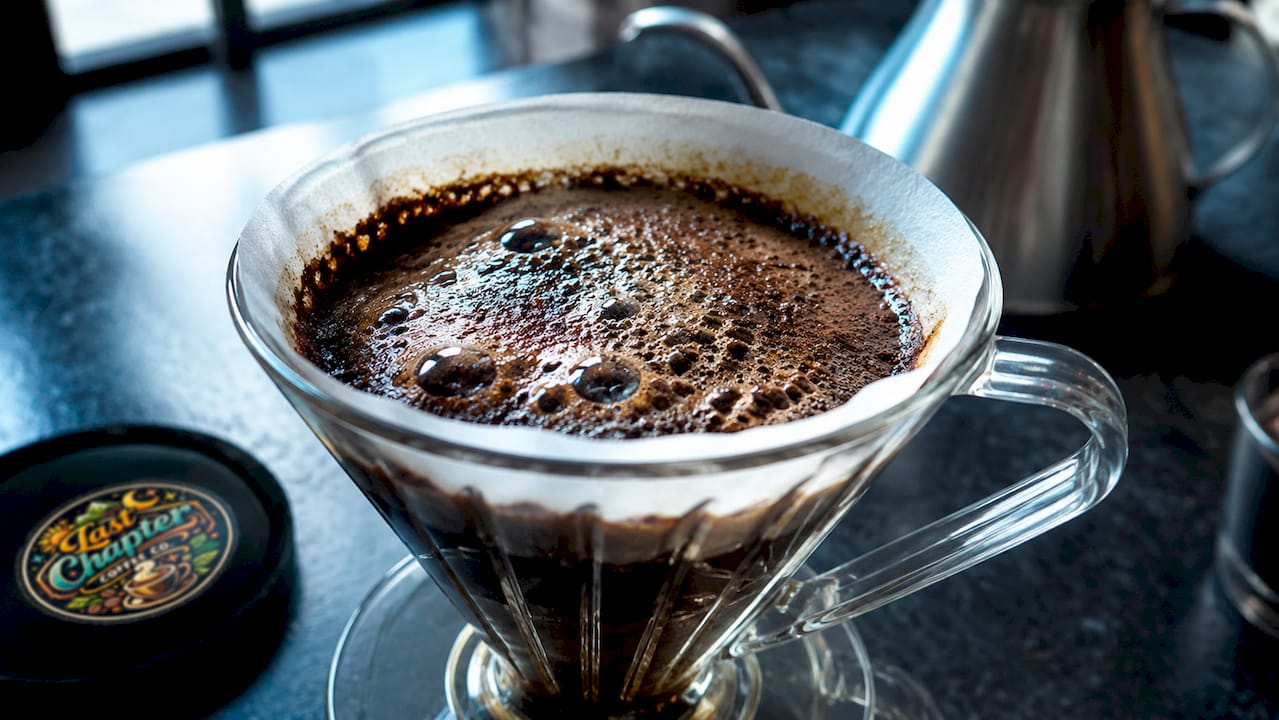
A strong, vigorous bloom signals freshly roasted coffee. Degassing slows over weeks after roasting, so older beans produce less CO2 and a weaker bloom. Freezing slows degassing further, which is why frozen beans can still bloom well months after roasting.
Roast level also shapes bloom intensity. Darker roasts release CO2 more aggressively because the roasting process drives more gas into the bean. Lighter roasts hold CO2 longer and release it more gradually. Both bloom, but they behave differently in the cup.
The flavor impact of a proper bloom is direct:
- Cleaner taste. CO2 carries bitter, acidic compounds. Releasing it before extraction removes those compounds from the brew.
- Better balance. Even saturation means every gram of coffee contributes equally to the final cup. No single area over-extracts or under-extracts.
- More consistent results. When you control the bloom, you control the extraction. Repeatability improves dramatically.
- Freshness as a quality signal. A vigorous bloom tells you the coffee was roasted recently. Minimal bloom tells you it was not.
One important nuance: the absence of bloom does not always mean bad coffee. Some very fresh roasts show minimal bloom because the beans were allowed to degas properly before packaging. What matters is understanding what your specific beans are telling you.
What are the best practices for blooming coffee?
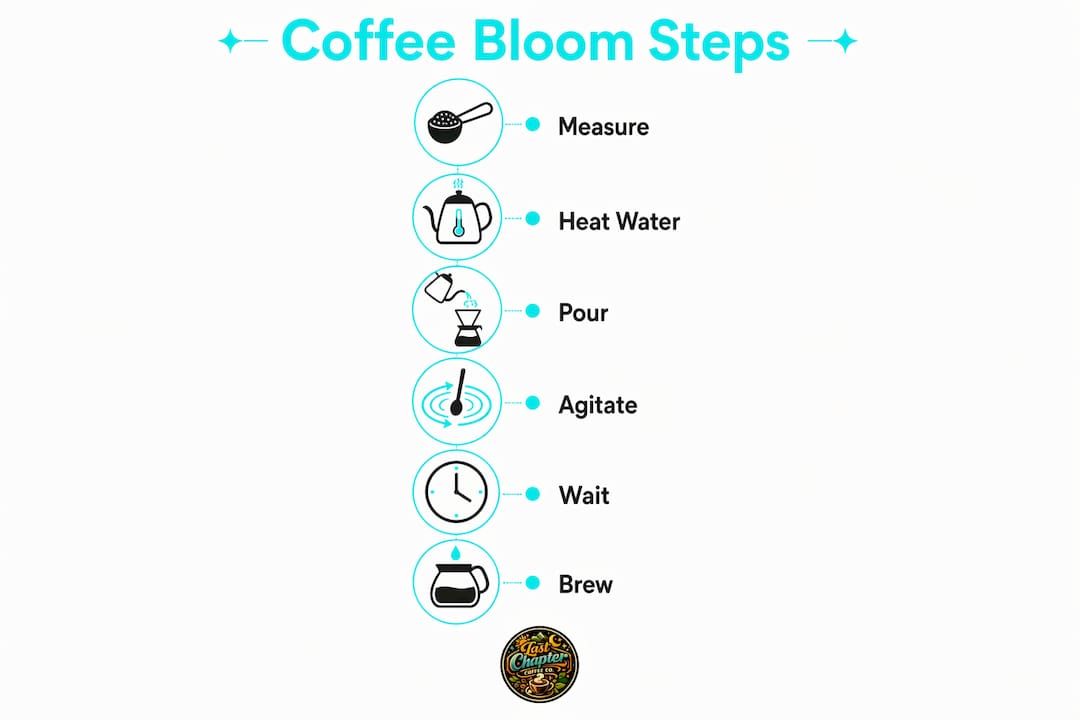
The standard bloom technique uses a water-to-coffee ratio of 2:1 to 4:1 during the bloom phase. A common starting point is 2–3 grams of water per 1 gram of coffee. For a 20-gram dose, that means pouring 40–60 grams of water to start.
Follow these steps for a reliable bloom every time:
- Grind fresh. Grind your beans immediately before brewing. Pre-ground coffee has already lost most of its CO2 and will not bloom effectively.
- Use water between 195°F and 205°F. Water that is too cool will not trigger a strong CO2 release. Water that is too hot can scald the grounds before extraction begins.
- Pour slowly and in a circular motion. Start at the center and spiral outward to wet all the grounds evenly. Pouring too forcefully can cause channeling and disrupt the coffee bed before extraction starts.
- Wait 30–45 seconds. Watch the dome form and hold. The bloom is complete when the bubbling slows and the dome begins to settle.
- Adjust by freshness. Very fresh beans may need the full 45 seconds or slightly more. Older beans may need only 20–25 seconds because less CO2 remains.
Pro Tip: Set a timer the moment you start your bloom pour. Consistency in bloom time is one of the easiest ways to make your brewing repeatable without changing anything else.
Gentle agitation during bloom, either a slow swirl of the brewer or a single stir with a spoon, can help water reach dry spots in the coffee bed. The key word is gentle. Aggressive agitation risks cooling the slurry and triggering early extraction, which throws off your timing and flavor balance.
How do roast level and brewing method affect the bloom?
Roast level changes how you should approach the bloom phase. Lighter roasts often need more water or a longer bloom time because their denser bean structure releases CO2 more slowly. Darker roasts bloom fast and aggressively. Using the same bloom parameters for both will produce different results.
The table below shows how bloom parameters shift across roast levels:
| Roast level | Bloom water ratio | Bloom time | Agitation |
|---|---|---|---|
| Light | 3:1 to 4:1 | 40–45 seconds | Gentle swirl recommended |
| Medium | 2:1 to 3:1 | 30–40 seconds | Optional swirl |
| Dark | 2:1 | 25–30 seconds | Minimal or none |
Manual pour-over methods like the V60 or Chemex showcase the bloom most clearly because you control every pour. That said, the CO2 release happens in any brewing method. Automatic drip machines, AeroPress, and French press all experience bloom. The difference is that manual methods let you observe and control it directly.
Pro Tip: If you brew a dark roast blend and notice the bloom dome collapsing very quickly, reduce your bloom water slightly. A fast collapse means the CO2 cleared early and you risk over-wetting the bed before extraction.
Agitation during bloom divides experienced brewers. Stirring distributes water more thoroughly and reduces channeling. Swirling is gentler and keeps the coffee bed intact. Both work. The wrong move is stirring hard and fast, which cools the slurry, disrupts the bed, and starts extraction before the CO2 has fully cleared.
Key Takeaways
Coffee bloom is the single most controllable variable between a flat, uneven cup and a clean, balanced extraction.
| Point | Details |
|---|---|
| Bloom definition | Coffee bloom is the CO2 release when hot water first contacts freshly ground coffee. |
| Freshness signal | A vigorous bloom indicates recently roasted beans; weak bloom suggests older or pre-ground coffee. |
| Correct water ratio | Use 2:1 to 4:1 water-to-coffee ratio and wait 30–45 seconds for full CO2 release. |
| Roast adjustments | Lighter roasts need more water and longer bloom time; darker roasts need less of both. |
| Agitation caution | Gentle swirling or stirring improves saturation, but aggressive agitation risks early extraction. |
Why I think most home brewers rush the bloom
Most home brewers treat bloom as a formality. They pour a splash of water, count to ten, and move on. That is not a bloom. That is a wet coffee bed with most of its CO2 still intact.
The bloom phase taught me more about my beans than any other part of brewing. When I switched to a freshly roasted single origin after months of grocery store bags, the dome that formed was almost alarming. It pushed up nearly an inch above the filter. That visual told me everything about what I had been missing.
The part nobody talks about is that bloom time is a diagnostic tool. If your bloom collapses in under 15 seconds, your beans are either very dark or not as fresh as the bag claims. If it barely forms at all, your grind may be too coarse or the water too cool. You do not need a refractometer to diagnose extraction problems. You need to watch the bloom.
My honest caution is about agitation. I spent months stirring my bloom because every guide said it improved saturation. It does, but only if you are gentle. The two times I rushed it with a hard stir, the cup tasted thin and sharp. The CO2 had not fully cleared, and I had already started extracting. Patience during bloom is not optional. It is the whole point.
Experiment with bloom time before you change anything else in your recipe. Add five seconds. Subtract five seconds. The difference in the cup will tell you more than any chart.
— Rogee
Fresh beans that bloom beautifully, delivered to your door
The bloom you get from a cup depends entirely on the freshness of the beans in your grinder. Stale coffee does not bloom. Fresh coffee does.

Lastchaptercoffee sources and ships freshly roasted artisan blends with free US shipping on every order. The African Kahawa Blend is a standout for pour-over brewers who want to see a full, vigorous bloom. Its medium roast profile releases CO2 steadily, giving you the full 30–45 second window to work with. For espresso fans, the African Espresso delivers a dense, even bloom that supports clean crema formation. Both ship fast, arrive fresh, and reward the bloom technique you just learned.
FAQ
What is coffee bloom in simple terms?
Coffee bloom is the bubbling and swelling that happens when hot water first hits freshly ground coffee. It is caused by carbon dioxide escaping from the grounds.
How long should the coffee bloom last?
The bloom phase typically lasts 30–45 seconds. Very fresh beans may need slightly longer; older beans may finish faster because less CO2 remains.
Does all coffee bloom?
Most freshly ground coffee blooms. Pre-ground or older coffee shows minimal bloom because the CO2 has already escaped during storage.
Does bloom actually improve the taste?
Yes. Bloom releases CO2 that repels water and causes uneven extraction. Clearing it first allows water to saturate the grounds evenly, producing a cleaner, more balanced cup.
How much water do you use for the bloom?
The standard ratio is 2–3 grams of water per 1 gram of coffee. For a 20-gram dose, use 40–60 grams of water and wait 30–45 seconds before continuing.


