

Coffee crema is the golden-brown, velvety foam layer that forms on top of a freshly pulled espresso shot, created by emulsified coffee oils and dissolved CO2 gas forced out under high pressure. This thin layer is not decoration. It signals bean freshness, extraction quality, and brewing precision all at once. Understanding what coffee crema is and why it forms will change how you evaluate every espresso you drink, whether you pull shots at home or order at a specialty café. Baristas at Specialty Coffee Association-certified shops treat crema as the first diagnostic tool for any espresso.
What is coffee crema and how does it form?
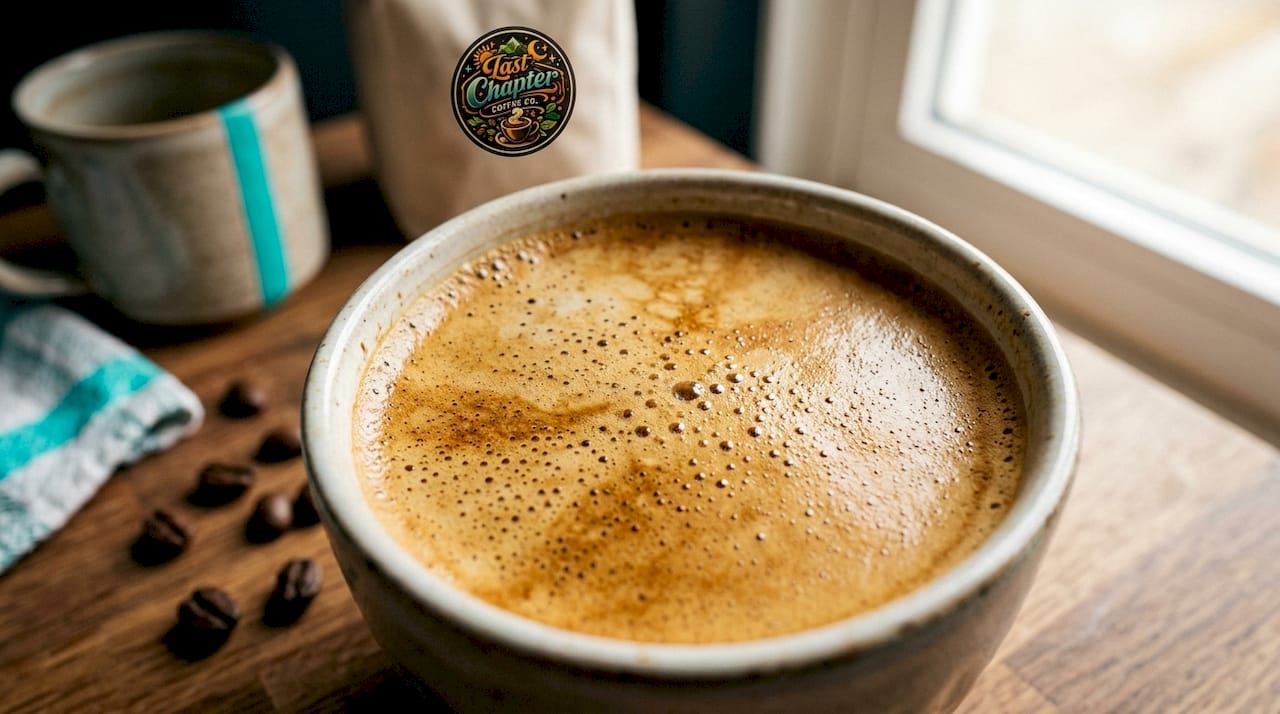
Coffee crema is a colloidal dispersion: microscopic CO2 gas bubbles surrounded by emulsified coffee lipids and proteins, suspended in water under high-pressure extraction conditions. When hot water hits finely ground coffee at around 9 bars of pressure, it supersaturates with CO2 trapped inside freshly roasted beans. As that pressurized liquid exits the portafilter, the gas expands rapidly and forms a stable foam on the surface of your shot.
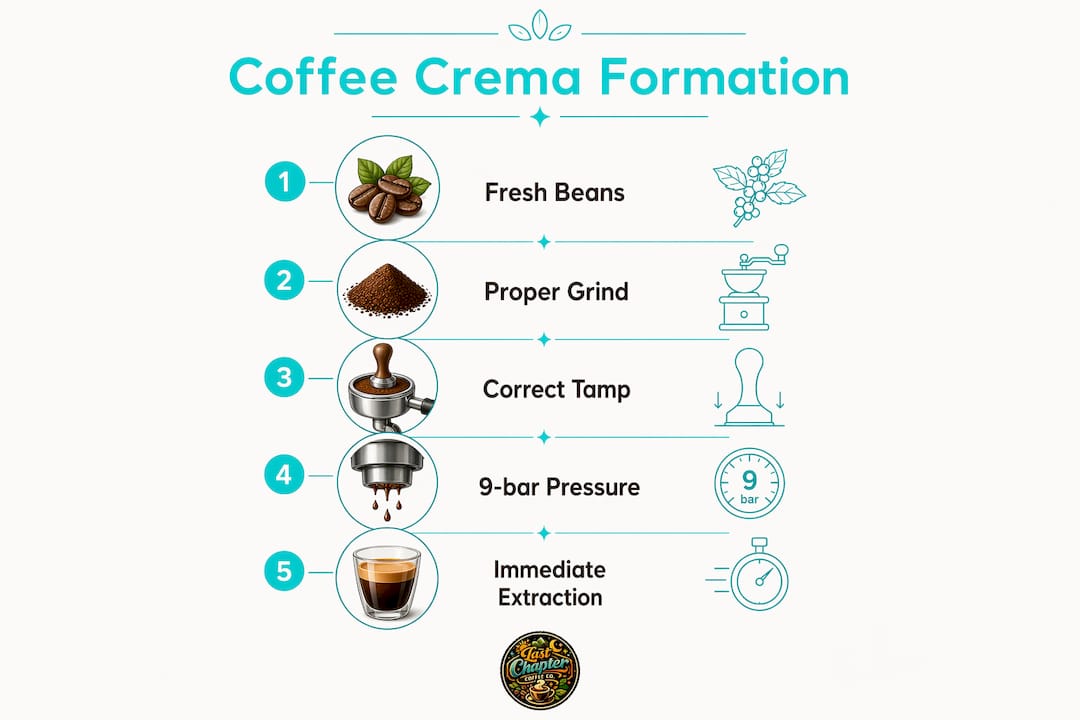
Five variables control whether that foam appears and how good it looks. Bean freshness determines how much CO2 is available. Grind size controls how much surface area the water contacts. Tamp pressure affects resistance and flow rate. Machine pressure drives the extraction itself. Water temperature, typically between 195°F and 205°F, determines how efficiently oils and gases are released. All five must work together. Adjust one incorrectly and crema suffers immediately.
The chemistry behind crema is what separates espresso from every other brew method. Drip coffee, French press, and pour-over cannot produce crema because none of them operate at the pressure required to dissolve and then rapidly release CO2 into a stable foam. Espresso’s five critical factors make it the only standard brewing method capable of producing authentic crema.
Pro Tip: Grind your beans immediately before pulling a shot. Pre-ground coffee loses CO2 within minutes of grinding, which directly reduces crema volume and stability.
Why crema matters: flavor, aroma, and texture
Crema acts as a physical lid over your espresso. It traps volatile aromatics and prevents them from escaping into the air before the cup reaches your lips. This is why a freshly pulled espresso smells intensely floral, nutty, or chocolatey the moment you bring it close. Without crema, those aromatic compounds dissipate within seconds.
The texture contribution is equally significant. Crema coats the tongue with a creamy, slightly oily film that extends the flavor finish well beyond what the liquid espresso alone delivers. That lingering aftertaste you notice after a well-pulled shot is crema doing its job. Baristas at high-volume specialty shops often describe it as the difference between a flat finish and a round, complete one.
“Crema is the espresso’s signature. It tells you the bean was fresh, the grind was right, and the machine was dialed in. Ignore it and you’re missing the most honest feedback your equipment can give you.”
Crema does taste slightly bitter on its own, which surprises many beginners. That bitterness is concentrated because crema holds a higher proportion of the coffee’s more intense aromatic compounds. Tasting crema in isolation versus tasting the full shot together reveals why the combination works. The crema’s bitterness balances the sweetness and acidity in the espresso beneath it.
Crema persistence lasts about two minutes post-extraction before it fades. This means you should drink your espresso within that window to get the full sensory experience the shot was designed to deliver.
Common misconceptions about crema quality
The biggest myth in espresso culture is that more crema means better espresso. Excessive or very tall crema can actually signal poor bean maturity or roast, or beans that are too fresh, typically two to four days post-roast, where unstable CO2 levels produce aggressive foam that collapses quickly. Quality crema is defined by color, texture, and stability. Not height.
Here is what the crema on your shot is actually telling you:
| Crema appearance | What it signals |
|---|---|
| Pale, thin, watery | Under-extraction: grind too coarse or pressure too low |
| Dark edges or tiger striping | Over-extraction: grind too fine or water too hot |
| Hazelnut brown, smooth, stable | Proper extraction with fresh beans |
| Disappears within 30 seconds | Stale beans with insufficient CO2 |
| Thick but collapses immediately | Beans too fresh (under 7 days post-roast) |
Crema color and stability provide direct visual feedback on your extraction parameters and bean freshness. A trained barista can read a shot’s crema and diagnose the problem before tasting a single drop.
Espresso crema is also frequently confused with other coffee preparations that use the word “crema.” Caffè crema is a long espresso drink popular in Germany and Austria, served in a larger cup with more water. It is a drink style, not a foam layer. Whipped instant coffee drinks like dalgona coffee produce a foam that looks similar but forms through mechanical agitation rather than pressure extraction. These are entirely different in chemistry and flavor.
Pro Tip: Stir your crema into the espresso before drinking rather than sipping through it. This integrates the concentrated aromatics with the body of the shot and gives you a more balanced, complete flavor.
How to make coffee crema at home
Achieving good crema at home comes down to four controllable factors: bean freshness, grind consistency, tamp technique, and machine quality.
-
Use beans in the 7 to 21-day post-roast window. Beans roasted more than three months ago contain very little or no CO2, which means no crema regardless of how well you grind or tamp. Check roast dates on every bag you buy. A freshly roasted dark roast blend will produce noticeably richer crema than a bag sitting on a grocery store shelf for months.
-
Grind fine and grind fresh. Espresso requires a fine, consistent grind. A burr grinder like the Baratza Encore ESP or the Breville Smart Grinder Pro produces far more uniform particle sizes than blade grinders, which directly improves crema formation. Grind immediately before pulling each shot.
-
Tamp with consistent, level pressure. Apply approximately 30 pounds of pressure when tamping. An uneven tamp creates channels in the puck where water flows unevenly, producing thin or patchy crema. A calibrated tamper from Normcore or Decent Espresso removes the guesswork.
-
Use a machine capable of true 9-bar pressure. This is where many home setups fall short. Some home espresso machines use pressurized or dual-wall baskets that produce crema-like foam through a mechanical trick rather than genuine extraction chemistry. That foam looks similar but tastes flat and disappears faster. Machines like the Breville Barista Express or the De’Longhi Dedica Pro operate at true 9-bar pressure and produce authentic crema when paired with fresh beans.
-
Drink the shot immediately. Crema fades quickly and should be evaluated and consumed within two minutes of pulling the shot. Letting it sit longer gives you a misleading picture of both the crema quality and the espresso beneath it.
For home brewers exploring equipment, the coffee accessories guide at Lastchaptercoffee covers grinders, tampers, and machines that support proper crema formation.
How coffee crema differs from similar preparations
Espresso crema, caffè crema, and crema-flavored coffee desserts share a name but nothing else. Understanding the differences prevents confusion when reading menus, recipes, or coffee guides.
- Espresso crema is the foam layer produced during high-pressure espresso extraction. It forms automatically when all extraction variables are correct. No additional steps are required.
- Caffè crema is a drink, not a foam. Popular in Germany, Switzerland, and Austria, it is a long espresso pulled with more water, served in a 6 to 8-ounce cup. The name refers to the drink’s smooth texture, not a foam layer on top.
- Crema de café sin nata is a Spanish coffee dessert made by whipping instant coffee with sugar and a small amount of water until it forms a thick, mousse-like foam. Some “crema” uses in coffee culture refer to these non-espresso frothy preparations, which are distinct from true coffee crema.
- Dalgona coffee follows a similar whipping process using instant coffee, sugar, and hot water, producing a foam that sits on top of milk. The foam is mechanically created and contains no dissolved CO2.
The key distinction is origin. Authentic espresso crema forms through chemistry and pressure. Every other “crema” in coffee culture is either a drink style or a manually created foam with a completely different structure and flavor profile.
Key takeaways
Coffee crema is the direct result of fresh beans, proper grind, correct tamp, and true 9-bar extraction pressure working together, and its color, texture, and stability tell you everything about the quality of the shot beneath it.
| Point | Details |
|---|---|
| Crema definition | Golden-brown foam from emulsified oils and CO2 released under 9-bar pressure during espresso extraction. |
| Freshness window | Use beans 7 to 21 days post-roast for optimal CO2 content and stable crema formation. |
| Quality over quantity | Hazelnut-brown, smooth, stable crema signals good extraction. Excessive foam often signals a problem. |
| Visual diagnostics | Pale thin crema means under-extraction; dark edges mean over-extraction; rapid fade means stale beans. |
| Drink it fast | Crema persists for about two minutes. Consume your espresso within that window for the full sensory experience. |
The part most people skip
I have pulled a lot of espresso shots over the years, and the single most consistent mistake I see home brewers make is chasing crema volume instead of crema quality. Someone buys a new machine, pulls a shot with a thick inch of foam, and assumes they have nailed it. Then they taste it and wonder why it tastes harsh or hollow.
The crema told them the answer before they even picked up the cup. Thick foam that collapses in 20 seconds almost always means the beans were roasted two days ago and are still off-gassing aggressively. Pale, watery crema means the grind is too coarse. Dark tiger-striped edges mean the extraction ran too long. The foam is a diagnostic tool, and most people treat it as a trophy.
What changed my own espresso at home was shifting focus from “how much crema” to “what does this crema look like.” I started keeping a roast date log for every bag I used, and the correlation between the 7 to 21-day window and crema quality was immediate and obvious. Beans from Lastchaptercoffee’s African Espresso line consistently hit that window and produce the kind of hazelnut-brown, stable crema that holds for a full two minutes.
Experiment with your grind in half-step increments and watch what happens to the crema before you taste the shot. You will learn more about your machine and your beans in one week of deliberate observation than in months of pulling shots without paying attention.
— Rogee
Pull better shots with Lastchaptercoffee
Great crema starts with great beans, and that means beans roasted recently and shipped fast.

Lastchaptercoffee sources and roasts espresso blends specifically for the kind of CO2 retention that produces rich, stable crema at home. The African Kahawa Blend is roasted to order and ships with free US delivery, putting fresh beans in your grinder within the optimal 7 to 21-day post-roast window. For high-caffeine shots with strong crema characteristics, the Max Caf Blend is built for home baristas who want consistent results without dialing in a new bag every week. Every order includes roast date information so you know exactly where your beans sit in the freshness window before you pull your first shot.
FAQ
What is coffee crema made of?
Coffee crema is made of CO2 microbubbles surrounded by emulsified coffee oils and proteins, formed when hot water extracts espresso under approximately 9 bars of pressure. The rapid pressure drop as liquid exits the portafilter causes dissolved gas to expand and stabilize into foam.
How long does espresso crema last?
Crema persists for about two minutes after the shot is pulled before it fades into the espresso. Drink your shot within that window to experience the full aroma and texture crema provides.
Why does my espresso have no crema?
The most common causes are stale beans with insufficient CO2, a grind that is too coarse, or a machine that does not reach true 9-bar pressure. Beans older than three months produce little to no crema regardless of technique.
Is more crema always better?
No. Excessive or very tall crema often signals beans that are too fresh (under 7 days post-roast) or a poorly calibrated roast, producing unstable foam that collapses quickly. Quality crema is smooth, hazelnut-brown, and stable for roughly two minutes.
What is the difference between coffee crema and milk foam?
Coffee crema forms automatically during espresso extraction through CO2 release and oil emulsification. Milk foam is created by aerating steamed milk with a steam wand. The two are chemically unrelated and serve different roles in espresso-based drinks.


