

Specialty coffee is defined as coffee that scores 80 points or higher on the Specialty Coffee Association’s 100-point cupping scale, evaluated by certified Q graders. It represents the top tier of the global coffee market, distinguished not just by flavor but by full traceability from farm to cup. Unlike commodity coffee, which is blended anonymously and traded on futures markets, specialty coffee carries a verifiable origin story. This guide breaks down how it’s graded, what it tastes like, why it matters for farmers, and how you can start brewing it at home.
What is specialty coffee and how is it graded?
Specialty coffee is a quality grade applied to green coffee beans and their supply chain, not just the roast level. Any roast, from light to dark, can qualify as specialty if it meets the grading standards set by the Specialty Coffee Association (SCA). The grade is earned through a formal evaluation process, not a marketing label.
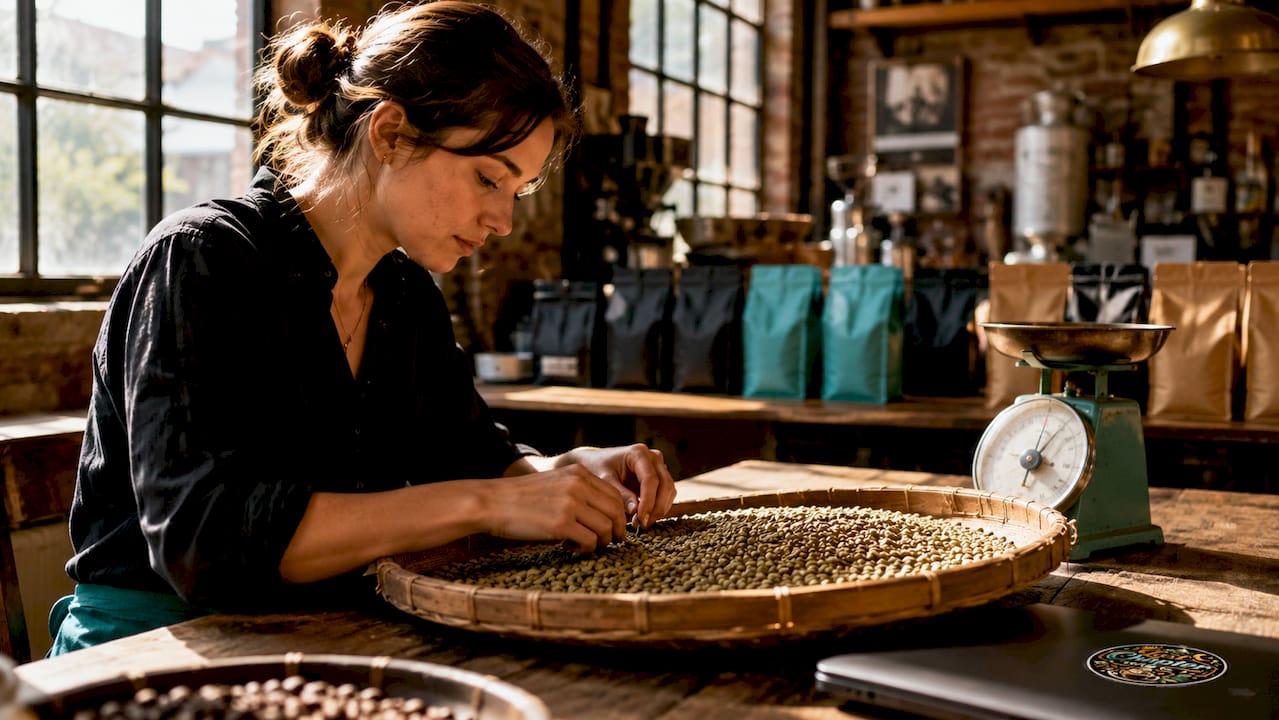
The SCA cupping scale runs from 0 to 100. Certified Q graders evaluate coffee on ten attributes: fragrance, aroma, flavor, aftertaste, acidity, body, balance, uniformity, clean cup, and sweetness. Defects subtract points, making the process strict and objective. A score of 80–84.99 earns the label “Very Good,” 85–89.99 is “Excellent,” and 90–100 is “Outstanding”, a category very few coffees ever reach.
Defect limits are equally strict. Specialty grade allows 0–5 defects per 350 grams of green beans. Commercial coffee regularly exceeds this threshold and is blended to mask inconsistencies. That blending is exactly why a grocery store bag of coffee tastes the same every time but rarely tastes remarkable.
The SCA has also expanded its definition through the Coffee Value Assessment (CVA) framework. Specialty coffee now includes sensory quality, consistency, sustainability, and producer impact as core criteria. A high cupping score alone no longer tells the full story.
Pro Tip: When buying specialty coffee, look for the cupping score on the bag or product page. A score of 87 or above signals you’re getting something genuinely exceptional, not just marketing copy.
Specialty coffee vs. commodity coffee: a direct comparison
| Feature | Specialty Coffee | Commodity Coffee |
|---|---|---|
| Minimum cupping score | 80+ out of 100 | No minimum score required |
| Defect limit | 0–5 per 350g sample | No strict limit; blended to mask defects |
| Traceability | Farm, lot, or cooperative | Anonymous; traded on futures market |
| Pricing model | Premium, direct or transparent trade | Contract “C” commodity market |
| Roast approach | Tailored to origin flavor | Standardized for consistency |
| Flavor profile | Complex, origin-specific | Uniform, often bitter or flat |
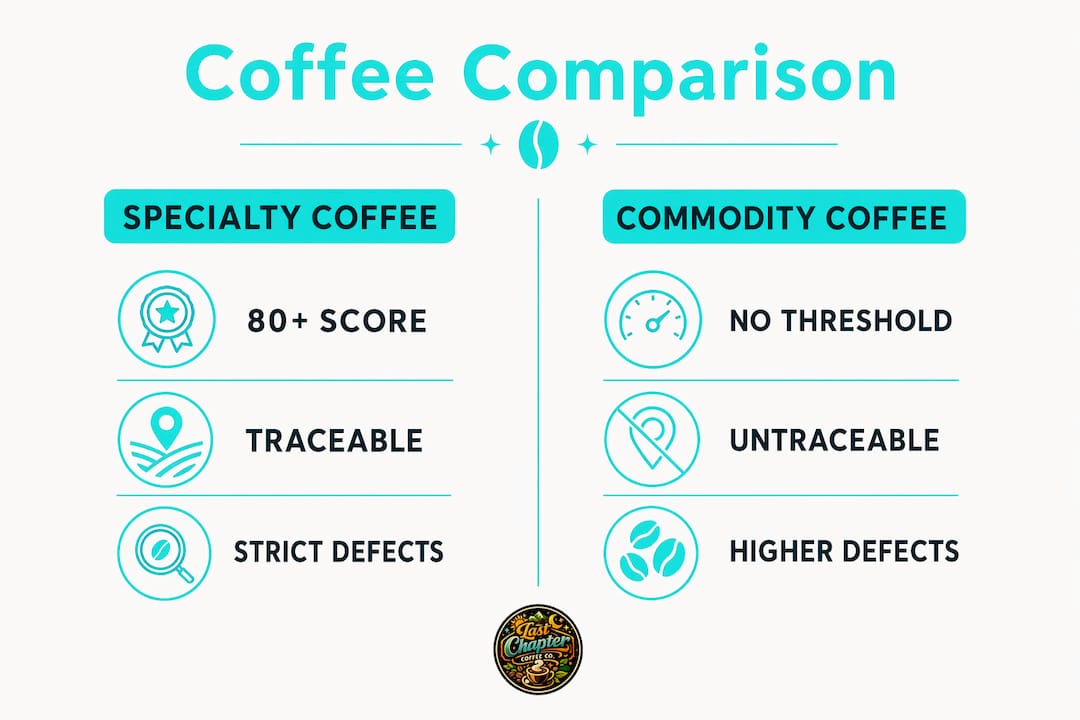
Commercial coffee is traded on the Contract “C” commodity market without any traceability. You have no way of knowing which farm, country, or even continent your beans came from. Specialty coffee flips that entirely.
What does specialty coffee actually taste like?
Specialty coffee’s superior flavor comes from a combination of origin, altitude, varietal, and processing method. Terroir and processing typically have a stronger impact on final cup character than varietal alone. A Yirgacheffe from Ethiopia processed naturally will taste dramatically different from the same varietal washed and dried on raised beds.
Here are the sensory attributes you’ll notice most in specialty coffees:
- Acidity: Not sourness. Think bright, clean tartness similar to a ripe stone fruit or citrus zest. High-altitude coffees from Ethiopia or Kenya tend to have the most pronounced acidity.
- Body: The weight and texture of the coffee on your palate. Sumatra coffees are known for a heavy, syrupy body. Lighter washed coffees feel more tea-like.
- Flavor notes: Specialty coffees can carry jasmine, blueberry, dark chocolate, brown sugar, or even black tea notes. These are real compounds in the bean, not added flavoring.
- Aftertaste: A clean, lingering finish is a hallmark of high-scoring coffees. Bitterness that coats your mouth signals lower quality or over-roasting.
- Aroma: Fragrance before brewing and aroma after are both scored separately by Q graders. A complex dry fragrance is one of the first signs of a high-quality bean.
Lighter roasting preserves these distinct flavor compounds. Darker roasts, common in commodity coffee, burn off the delicate aromatics and replace them with roast-forward bitterness. This is why specialty roasters tend to roast lighter and why your first sip of a well-made pour-over might surprise you with its fruit-forward complexity.
Pro Tip: If you’re new to specialty coffee, start with a flavored coffees sample pack to explore different flavor profiles side by side before committing to a single origin.
How does specialty coffee support farmers and sustainability?
The specialty coffee supply chain is short and transparent. Traceability to a specific farm, lot, or cooperative is a defining feature, unlike commodity coffee which loses its identity the moment it enters the futures market. That traceability has real consequences for the people growing your coffee.
Here is how the specialty supply chain creates tangible benefits:
- Direct trade premiums: Roasters who buy directly from farms pay above-market prices. Farmers receive a larger share of the final retail price compared to commodity channels.
- Incentive for quality: When farmers are paid more for higher-scoring lots, they invest in better processing equipment, shade-grown cultivation, and careful harvesting. Quality and income rise together.
- Sustainability alignment: Specialty coffee incentivizes farmers to adopt sustainable and regenerative farming practices. Healthier soil, reduced chemical use, and biodiversity protection become financially viable choices.
- Community investment: Premium payments fund schools, healthcare, and infrastructure in coffee-growing regions. The SCA frames specialty coffee as a tool for equity in global production, benefiting producers and consumers alike.
The “third wave” coffee movement drove this shift. It transformed coffee from a mass commodity into an artisanal product valued for origin and flavor complexity. That cultural shift created the market conditions where paying $22 for a 250-gram bag of Ethiopian natural process makes sense to a growing number of consumers.
Matt Woodburn-Simmonds puts it plainly: the specialty label is earned through an intense evaluation process, so consumers pay for verified quality rather than marketing hype. That accountability runs through the entire chain, from the farmer’s picking table to your cup.
How do you brew specialty coffee at home?
Brewing specialty coffee at home does not require expensive equipment. It requires attention to a few key variables: freshness, grind consistency, water temperature, and brew method.
Pour-over and AeroPress are the two most popular methods for highlighting the delicate flavors of specialty coffee. Pour-over brewing, using tools like the Hario V60 or Chemex, gives you full control over water flow and extraction time. AeroPress is faster, more forgiving, and produces a concentrated, clean cup that works well with high-acidity single origins.
When selecting beans, prioritize these factors:
- Roast date over roast level: Buy coffee roasted within the last two to four weeks. Freshness matters more than whether the roast is light or dark.
- Single origin vs. blend: Single origin coffees let you taste the character of one specific place. Blends, including the best artisan coffee blends, are crafted to balance flavor across origins and often deliver more consistency for everyday drinking.
- Bag transparency: Look for bags that list the farm name, processing method, altitude, and cupping score. Opacity on these details is a red flag.
- Small batch roasting: Smaller roasters roast more frequently, which means fresher coffee reaches you. Large commercial roasters often hold inventory for months.
Check out the home brewing essentials guide from Lastchaptercoffee for a full breakdown of the equipment worth owning at each budget level.
Pro Tip: Store your specialty beans in an airtight, opaque container at room temperature. Avoid the freezer unless you’re storing unopened bags for more than a month. Moisture and light are the two fastest ways to degrade freshly roasted coffee.
Key takeaways
Specialty coffee earns its label through a strict, scored evaluation process that covers sensory quality, traceability, and producer impact, making it fundamentally different from commodity coffee at every level of the supply chain.
| Point | Details |
|---|---|
| Scoring threshold | Specialty coffee requires a minimum score of 80 out of 100 on the SCA cupping scale. |
| Defect standard | Specialty grade allows 0–5 defects per 350g sample; commodity coffee has no such limit. |
| Flavor origin | Terroir, altitude, and processing method shape flavor more than varietal alone. |
| Supply chain impact | Transparent sourcing and direct trade premiums support farmer livelihoods and sustainable practices. |
| Home brewing priority | Roast date and freshness matter more than brew method when selecting specialty beans. |
Why specialty coffee changed how i think about quality
I spent years drinking dark roast commodity coffee and thinking I understood what good coffee tasted like. The first time I tried a properly brewed Ethiopian Yirgacheffe, scored at 87 points, I genuinely thought something had been added to it. The blueberry and jasmine notes were that distinct.
What I’ve learned since is that most people never encounter real specialty coffee because the label gets misused constantly. Grocery store bags with words like “premium” or “artisan” carry no grading accountability. The SCA cupping scale exists precisely to cut through that noise.
The trend I find most encouraging in 2026 is the growing number of consumers who ask for the cupping score before buying. That behavior shift is exactly what the specialty industry needs to sustain the premium pricing that keeps farmers invested in quality. When you pay more for a verified 88-point coffee from a specific cooperative in Colombia, you’re not paying for branding. You’re paying for a documented chain of decisions made by real people at every step.
My honest advice: ignore roast level as your primary filter. Focus on roast date, origin transparency, and score. Those three signals will tell you more about what’s in the bag than any marketing copy ever will. The African Espresso from Lastchaptercoffee is a good example of a blend where origin transparency and flavor complexity are both front and center.
— Rogee
Explore specialty blends from Lastchaptercoffee
Lastchaptercoffee sources and roasts specialty grade coffee with full origin transparency, delivering directly to your door with free US shipping on every order. Each blend is small-batch roasted to preserve the flavor compounds that make specialty coffee worth drinking.
The African Kahawa Blend is one of the top specialty coffee blends in the current lineup, built around bright acidity, stone fruit notes, and a clean finish that reflects its East African origin. If you want to experience what a high-scoring coffee actually tastes like without guesswork, this is the place to start. Lastchaptercoffee ships internationally, so wherever you are, fresh specialty coffee is within reach.
FAQ
What is specialty grade coffee exactly?
Specialty grade coffee scores 80 points or higher on the SCA’s 100-point cupping scale, evaluated by certified Q graders across ten sensory attributes. It also requires strict defect limits of 0–5 per 350 grams of green beans.
Why does specialty coffee cost more than regular coffee?
Specialty coffee commands higher prices because of rigorous quality evaluation, traceable sourcing, and direct trade premiums paid to farmers. You’re paying for verified quality and a transparent supply chain, not just a label.
What are the main specialty coffee types by processing method?
The three primary processing methods are washed, natural, and honey. Washed coffees tend to be clean and bright, natural process coffees are fruity and complex, and honey process coffees fall between the two in body and sweetness.
Does roast level affect whether coffee is specialty?
Roast level does not determine specialty status. Any roast level can qualify as specialty if the green beans meet SCA grading standards before roasting. Lighter roasts simply preserve more of the origin flavor compounds that make specialty coffee distinctive.
What brewing method works best for specialty coffee?
Pour-over and AeroPress are the most effective methods for highlighting specialty coffee’s flavor complexity. Both give you control over extraction variables and produce a clean cup that lets origin character come through clearly.


